Derived Play: BiDi Glyph Rescue
Create one polished public-gallery concept image titled exactly "Derived Play: BiDi Glyph Rescue". Use case: derived play mechani...
把 GPT Image 2 用作多语种海报本地化预检:从虚构活动 brief 生成带 language lanes、RTL/LTR 方向、baseline、bounding box、numeral/date、diacritic space 和 native-review handoff 的可审查 poster proof。
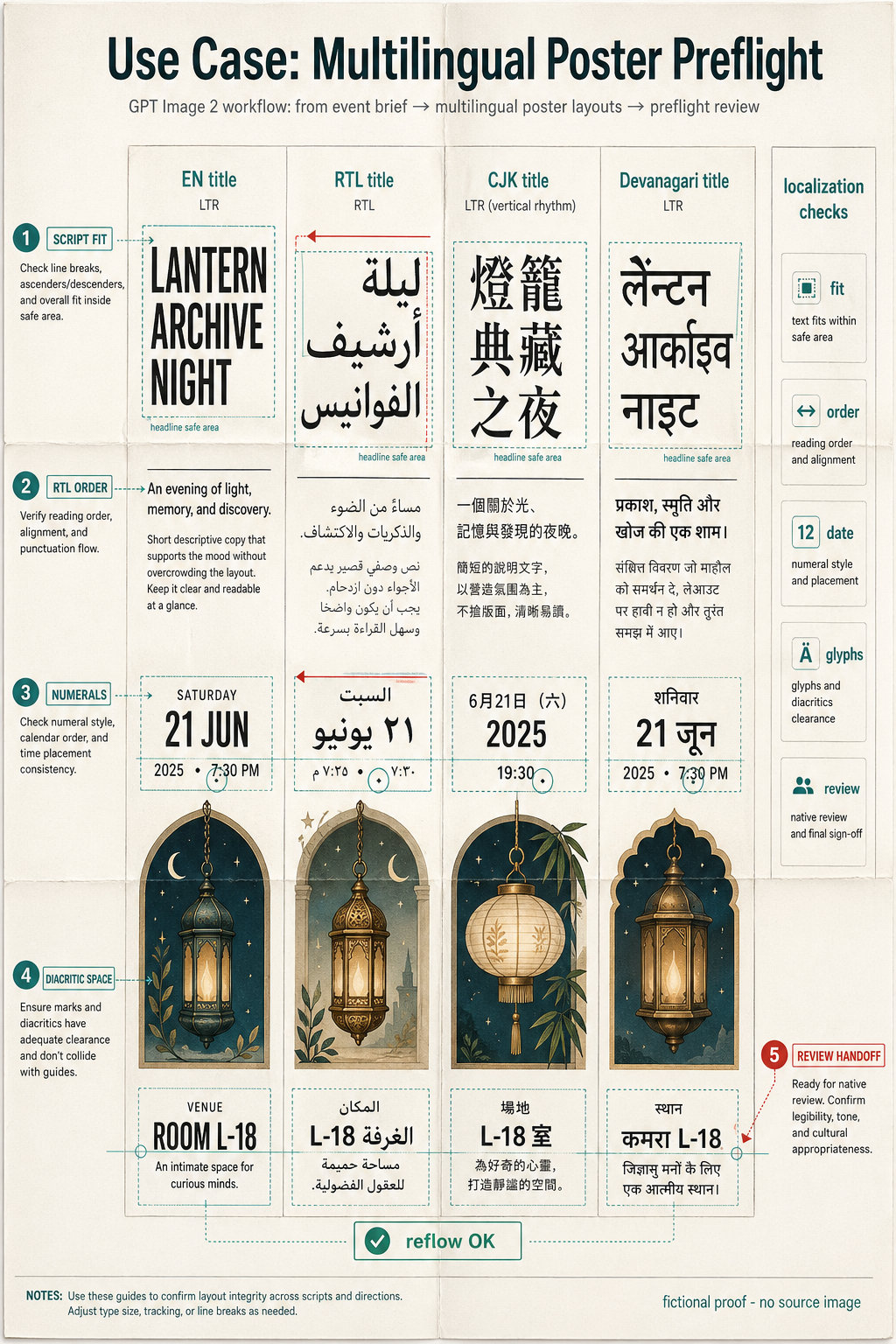
Use this as a reference for Bidi Text, Localization QA, Multilingual Poster Preflight, Multiscript Typography workflows, prompt structure, visual constraints, and output review.
Create one polished public-gallery concept image titled exactly "Use Case: Multilingual Poster Preflight".

Use case: localization QA / multiscript typography proof / GPT Image 2 text-layout workflow.
Asset type: tall portrait folded poster proof with annotation overlay, designed for a GPT Image 2 use-case gallery.

Primary request: Show GPT Image 2 being used to transform one fictional event brief into a multilingual poster preflight artifact. The image should demonstrate how generated poster layouts can be inspected for script fit, mixed text direction, clipped glyphs, numeral/date placement, and native-review handoff. This must be a flat print proof, not a dashboard, not a menu, not a route map, not a comic strip, not a product photo, not a physical controller, and not a 2x3 research board.

Fictional low-stakes event only: "Lantern Archive Night" at invented venue code "Room L-18". Do not include any real organization, logo, brand, city, country, address, QR code, phone number, URL, or ticket-like transactional details.

Composition: one coherent portrait poster proof on warm white paper with subtle fold marks. The center shows a clean fictional event poster divided into four vertical language lanes. Use short, generic, legible placeholder-like copy blocks with script-safe labels rather than claiming real translations: "EN title", "RTL title", "CJK title", "Devanagari title". Include small sample glyph clusters that look typographic but do not need to be real translated text. Make the lanes visually distinct through layout rhythm, not flags or cultural stereotypes.

Add a translucent preflight overlay with five numbered callouts: 1 SCRIPT FIT, 2 RTL ORDER, 3 NUMERALS, 4 DIACRITIC SPACE, 5 REVIEW HANDOFF. Show thin bounding boxes around text blocks, baseline guides, direction arrows, and one small corrected label strip reading "reflow OK". Add a narrow side rail labeled "localization checks" with compact readable chips: "fit", "order", "date", "glyphs", "review". Footer stamp: "fictional proof - no source image".

Visual style: refined international design-production proof, crisp editorial typography, precise annotation marks, muted ink palette with teal, graphite, saffron, and red correction accents, high legibility, generous margins, sophisticated but practical. The image should make the workflow clear: GPT Image output becomes a reviewable localization artifact with concrete QA criteria.

Safety and originality constraints: no real brands, no logos, no real event, no real institution, no real address, no QR code, no public figures, no politics/elections/parties/persuasion, no religious symbols, no medical/legal/financial claims, no hazardous instructions, no adult or explicit content, no gore, no celebrity likeness, no copyrighted characters, no living-artist style imitation. Do not copy any external prompt, poster, type specimen, dataset sample, article image, product UI, source image, artwork, creator style, or protected typeface specimen.
Source note: Original fictional multilingual poster preflight artifact generated locally after external source sweep. Sources informed only abstract multiscript typography workflow, bidirectional text failure modes, scene-text evaluation context, and localization review patterns; no external prompt text, poster, type specimen, dataset sample, article image, product UI, brand, source image, creator style, or protected typeface specimen was reused.
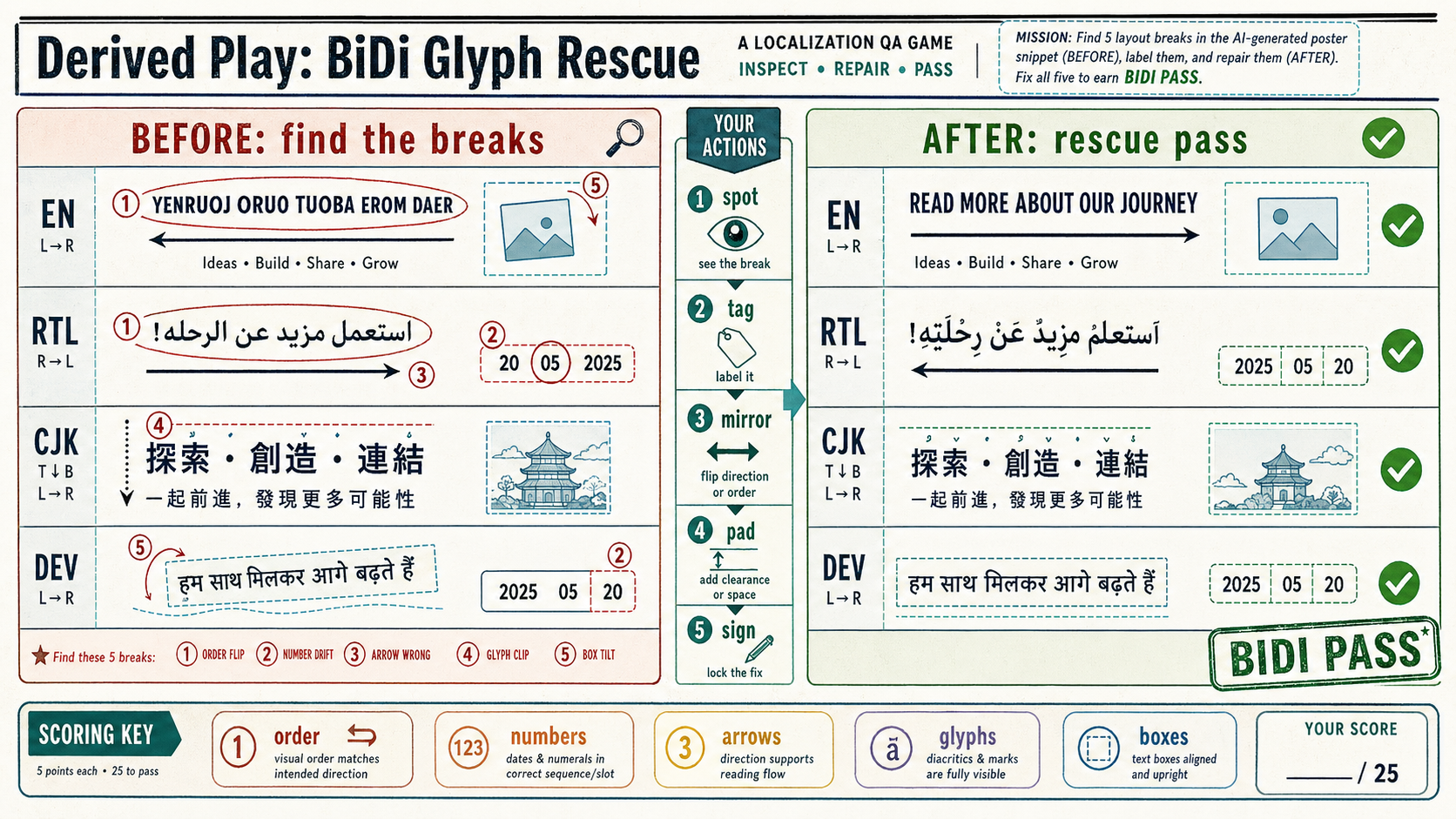
Create one polished public-gallery concept image titled exactly "Derived Play: BiDi Glyph Rescue". Use case: derived play mechani...
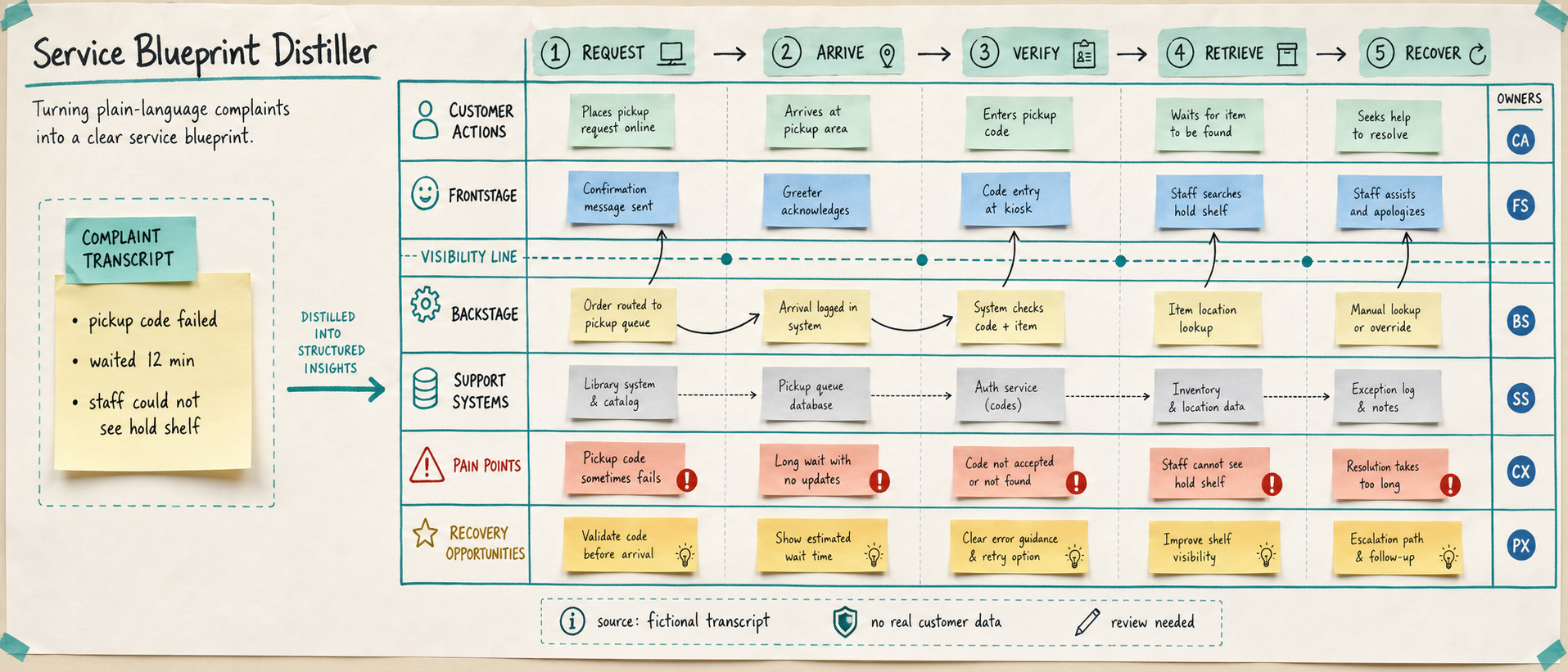
Use case: productivity-visual / service-design workflow Asset type: public gallery image for GPT Image 2 use-case research, ultra...
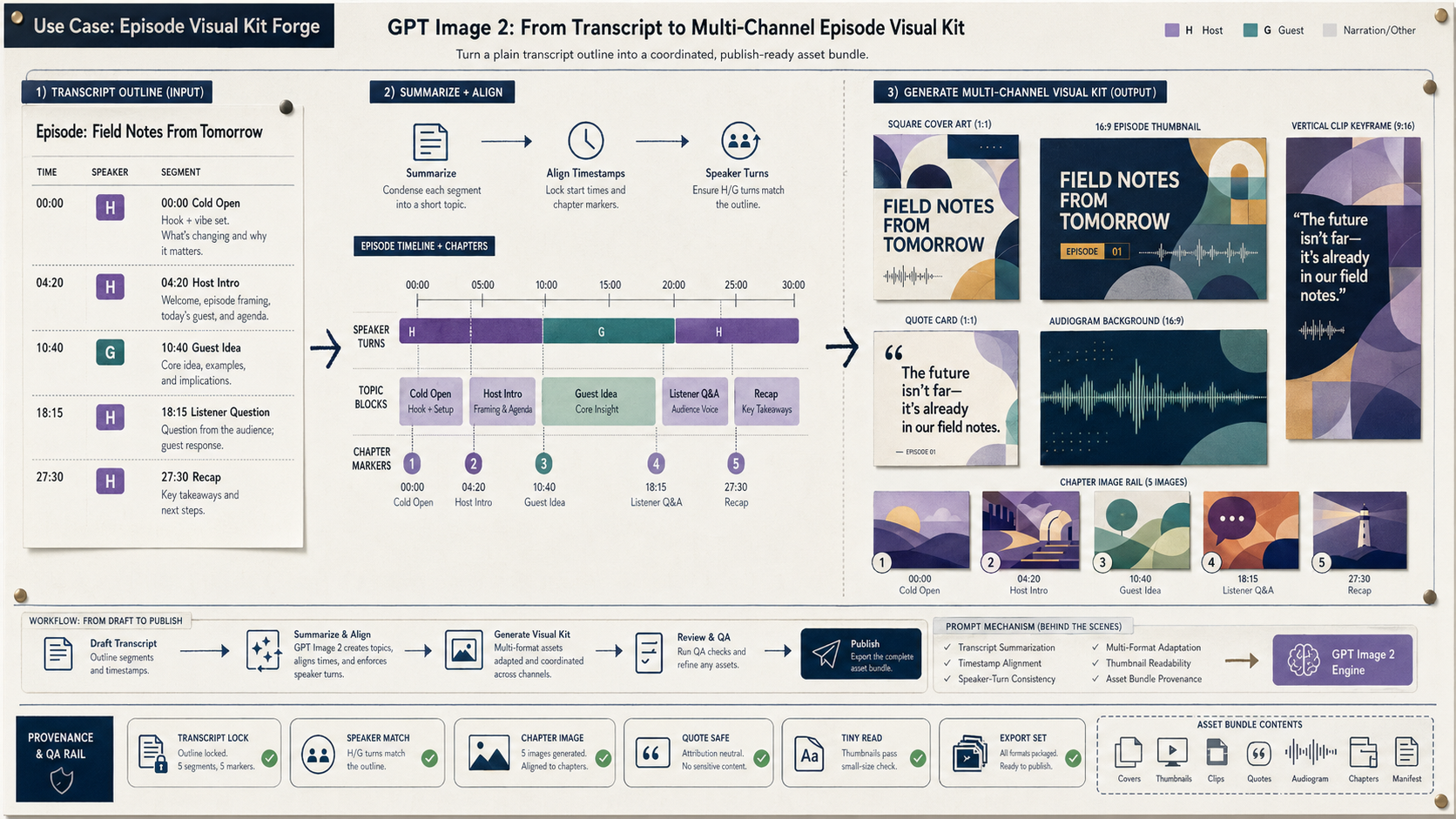
Create a wide 16:9 fictional podcast production artifact titled in small clear text "Use Case: Episode Visual Kit Forge". Show ho...
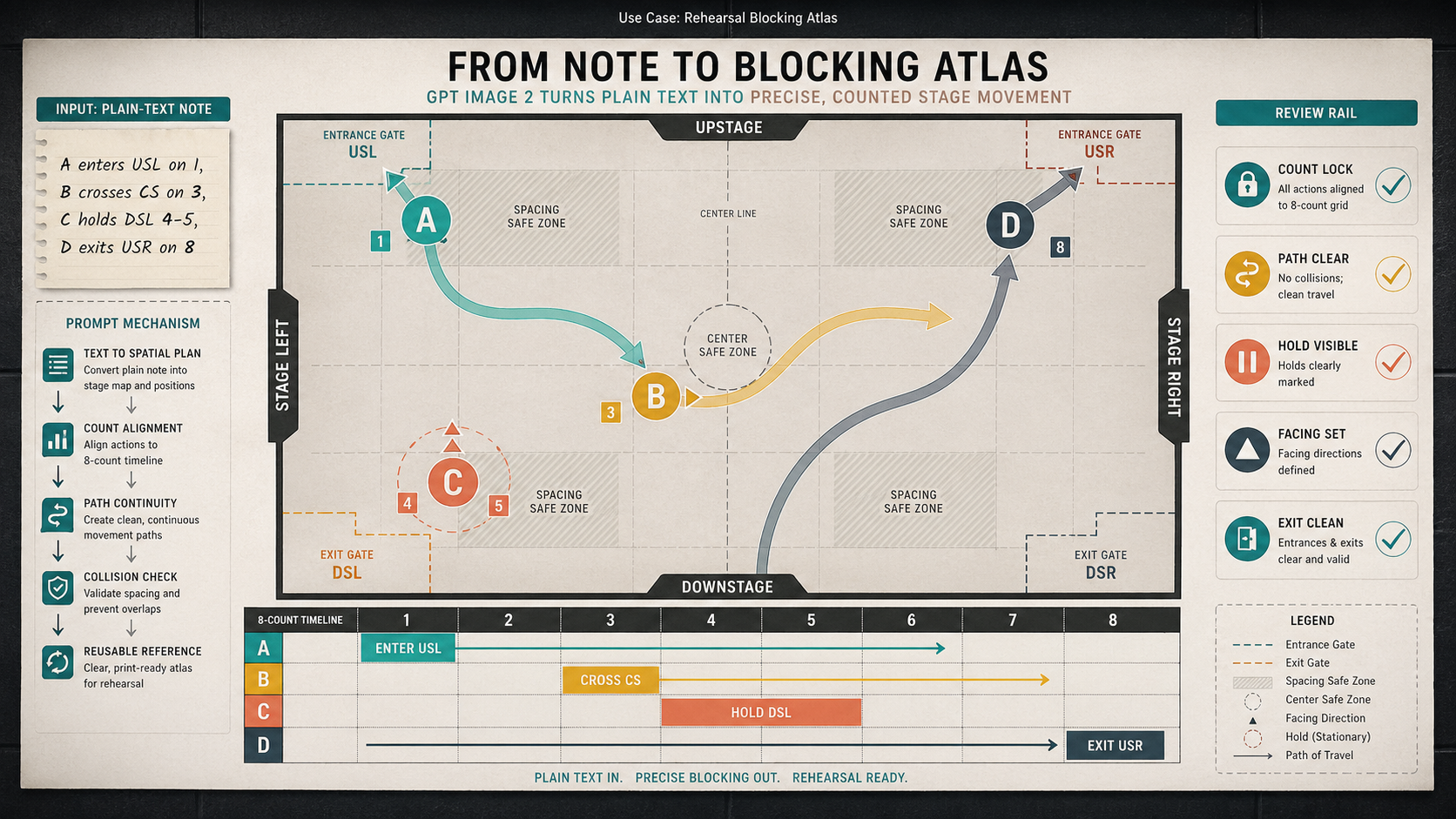
Create a wide 16:9 fictional rehearsal planning artifact titled visually only in small text as "Use Case: Rehearsal Blocking Atla...
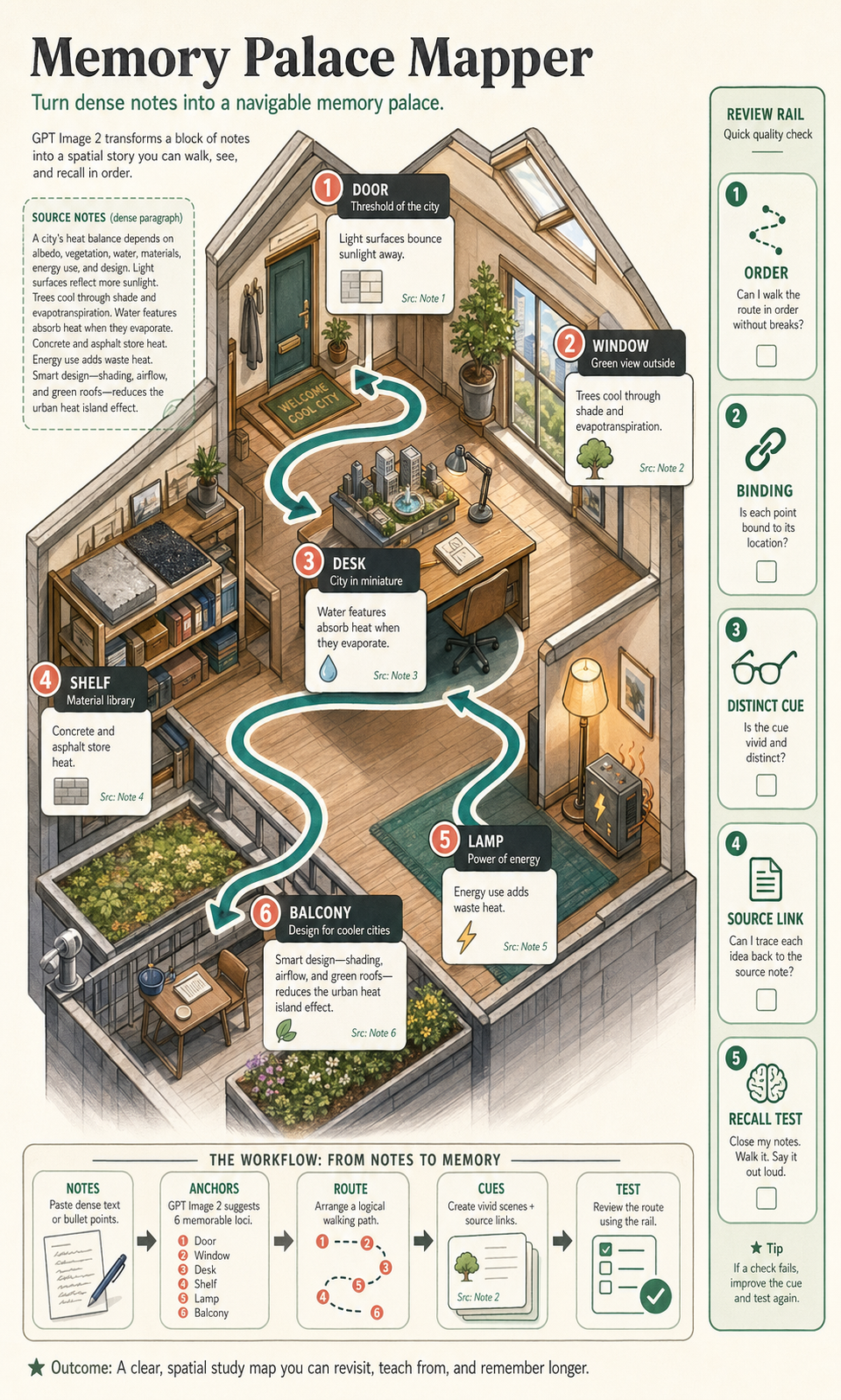
Create a polished, public-gallery image for GPT Image 2 use-case research. Use case: scientific-educational / productivity-visual...
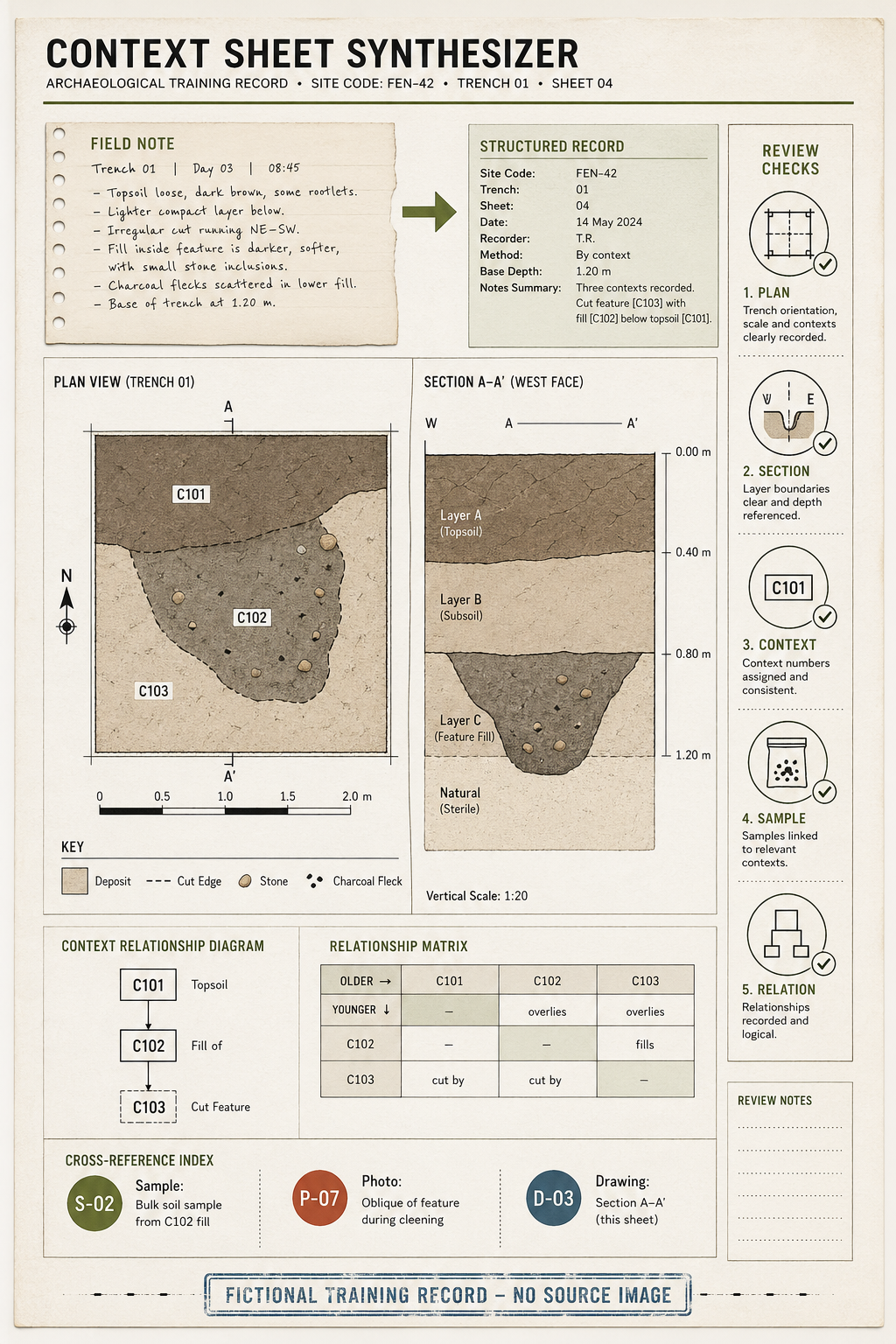
Create a single polished GPT Image 2 use-case image titled visually as a fictional archival field-record sheet, not a product pho...