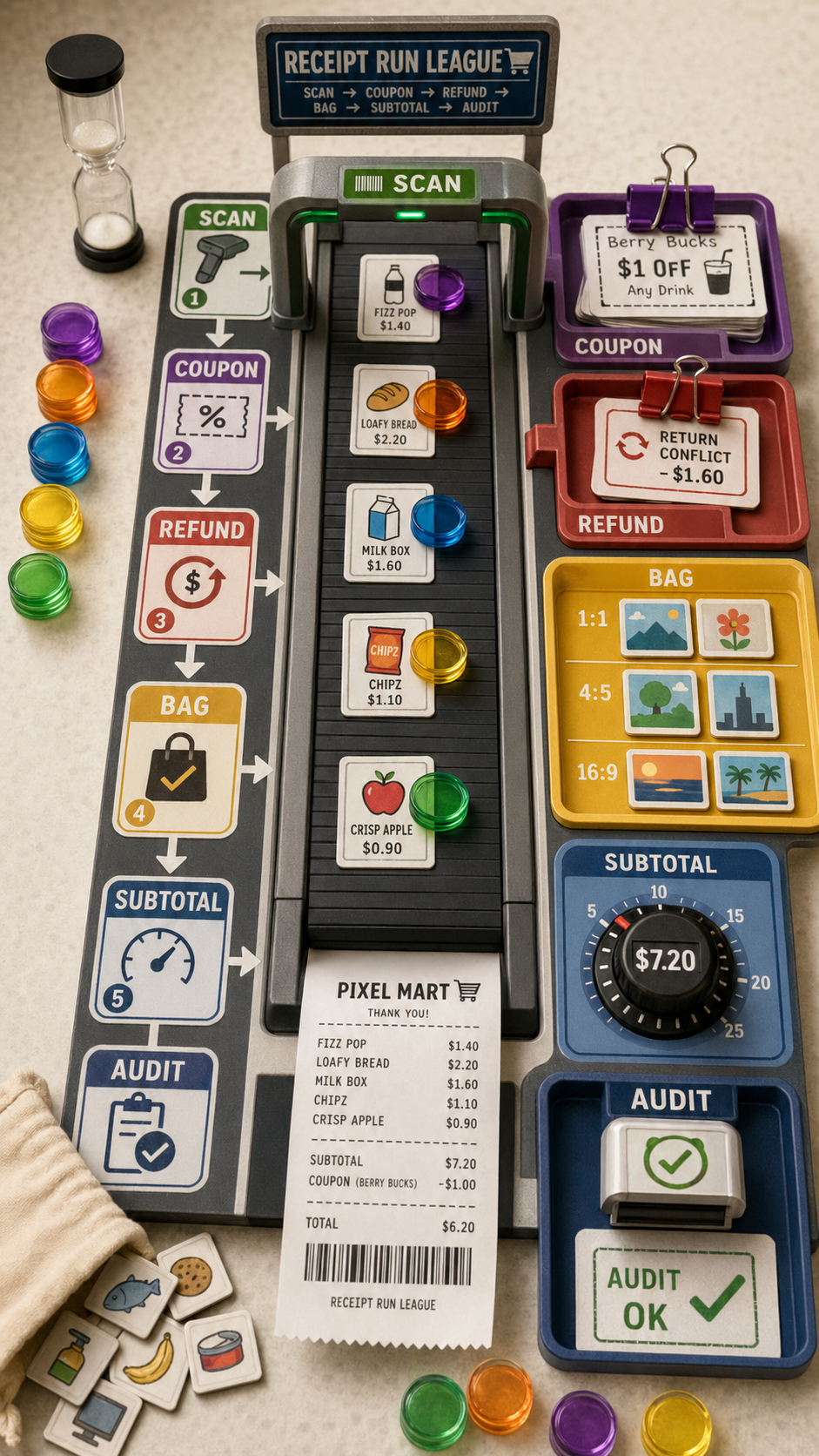
Derived Play: Receipt Run League
Derived Play: Receipt Run League Asset type: vertical 9:16 playable checkout-conveyor board game photograph, not a grid, not a si...
一张原创 GPT Image 2 用例图:用连续等距机器剖面展示裁切契约、遮挡复演、符号转实物、光照证明、字幕场景落地和混乱 brief 安全化。
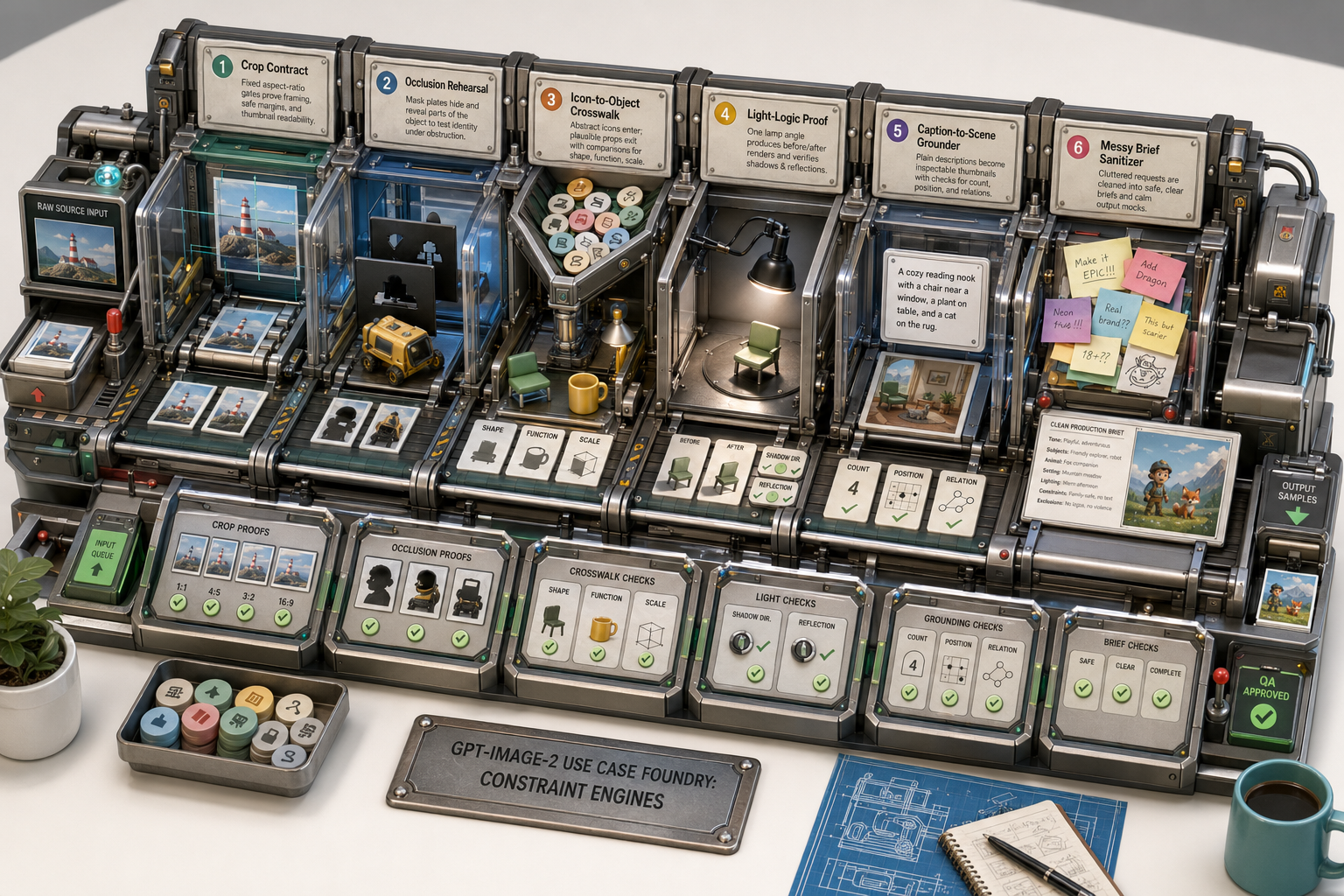
Use this as a reference for Caption Scene Grounder, Crop Contract, Game Design, Icon Object Crosswalk workflows, prompt structure, visual constraints, and output review.
Create an original GPT Image 2 use-case image as one 3:2 landscape scene, not a contact sheet, not a 2x3 grid, not separate cards, not a circular rules machine, not a fold-out field kit. Format: a single isometric cutaway of a fictional "visual constraint foundry" machine: conveyor belts, transparent inspection chambers, crop gates, mask tunnels, shadow rigs, symbol hoppers, proof stamps, and tiny printed output samples moving through one continuous factory-like object on a clean studio table. No logos, no real brands, no celebrity likenesses, no public figures, no copyrighted characters, no politics, no sexual content, no violence, no dangerous instructions, no watermarks.

Small readable title on a metal nameplate: "GPT-IMAGE-2 USE CASE FOUNDRY: CONSTRAINT ENGINES".

Show six clearly different original use-case stations integrated into the same continuous cutaway machine, each with a short readable English label on a small industrial tag:
1 "Crop Contract" - a rough source scene passes through fixed aspect-ratio gates; output prints prove subject placement, safe margins, and thumbnail readability.
2 "Occlusion Rehearsal" - simple mask plates hide and reveal parts of a fictional object; outputs test whether identity survives partial obstruction.
3 "Icon-to-Object Crosswalk" - tiny abstract pictogram tokens enter a hopper and become plausible fictional props, with comparison labels for shape, function, and scale.
4 "Light-Logic Proof" - a miniature shadow stage with one lamp angle generates before/after object renders and small check chips for shadow direction and reflection consistency.
5 "Caption-to-Scene Grounder" - plain accessibility-style scene descriptions become inspectable safe visual thumbnails, with chips for count, position, and relation accuracy.
6 "Messy Brief Sanitizer" - cluttered sticky-note requests are transformed into a clean, safe, fictional production brief and a calm output mockup; no harmful, political, sexual, or brand content.

Visual requirements: one continuous isometric machine with visible input materials, transformation channels, inspection gauges, and generated-output thumbnails for all six stations. Labels must be small but readable. Use varied accents across metal, glass, rubber belts, colored paper, and neutral tabletop; professional product-design photography with crisp concept-art precision, high detail, playful but rigorous, not dominated by purple, beige, slate, brown, or orange.
Derived Play: Receipt Run League Asset type: vertical 9:16 playable checkout-conveyor board game photograph, not a grid, not a si...
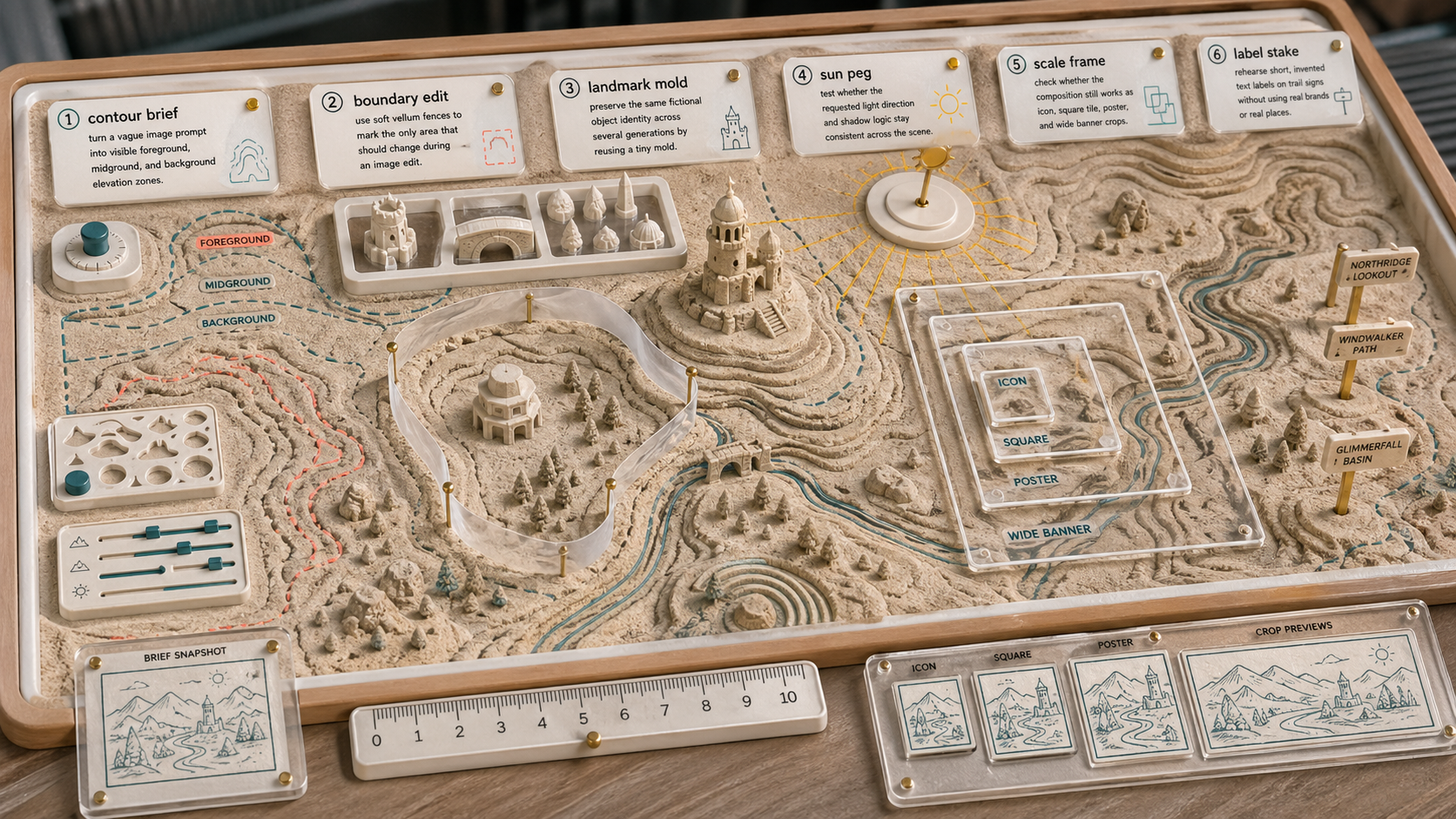
Create a wide 16:9 original GPT Image use-case concept scene titled "Use Case Sandbox: Contour Image Rehearsal". Purpose: visuali...
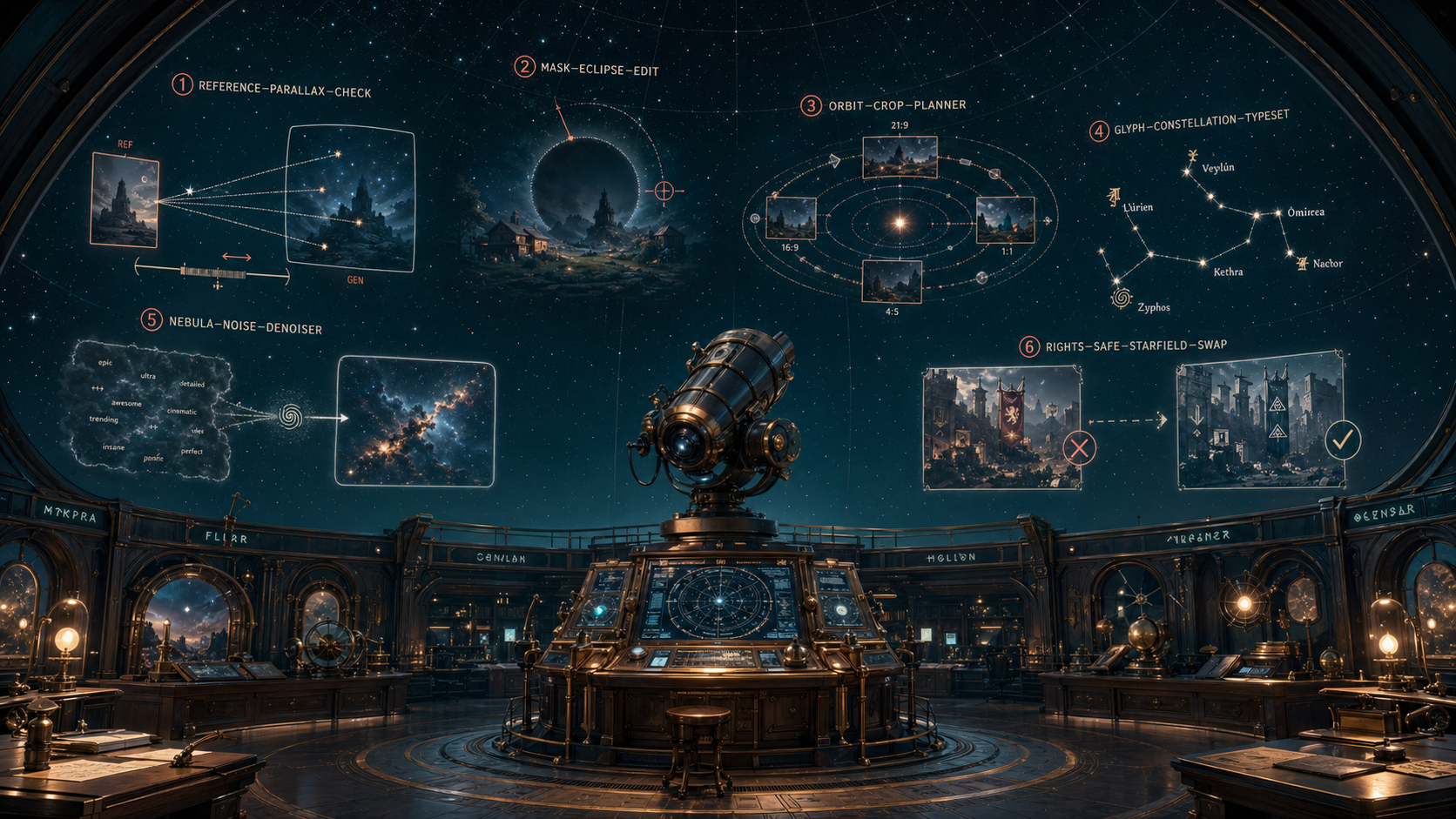
Create a single high-quality landscape concept image titled only through small fictional diagram labels, showing an original GPT...
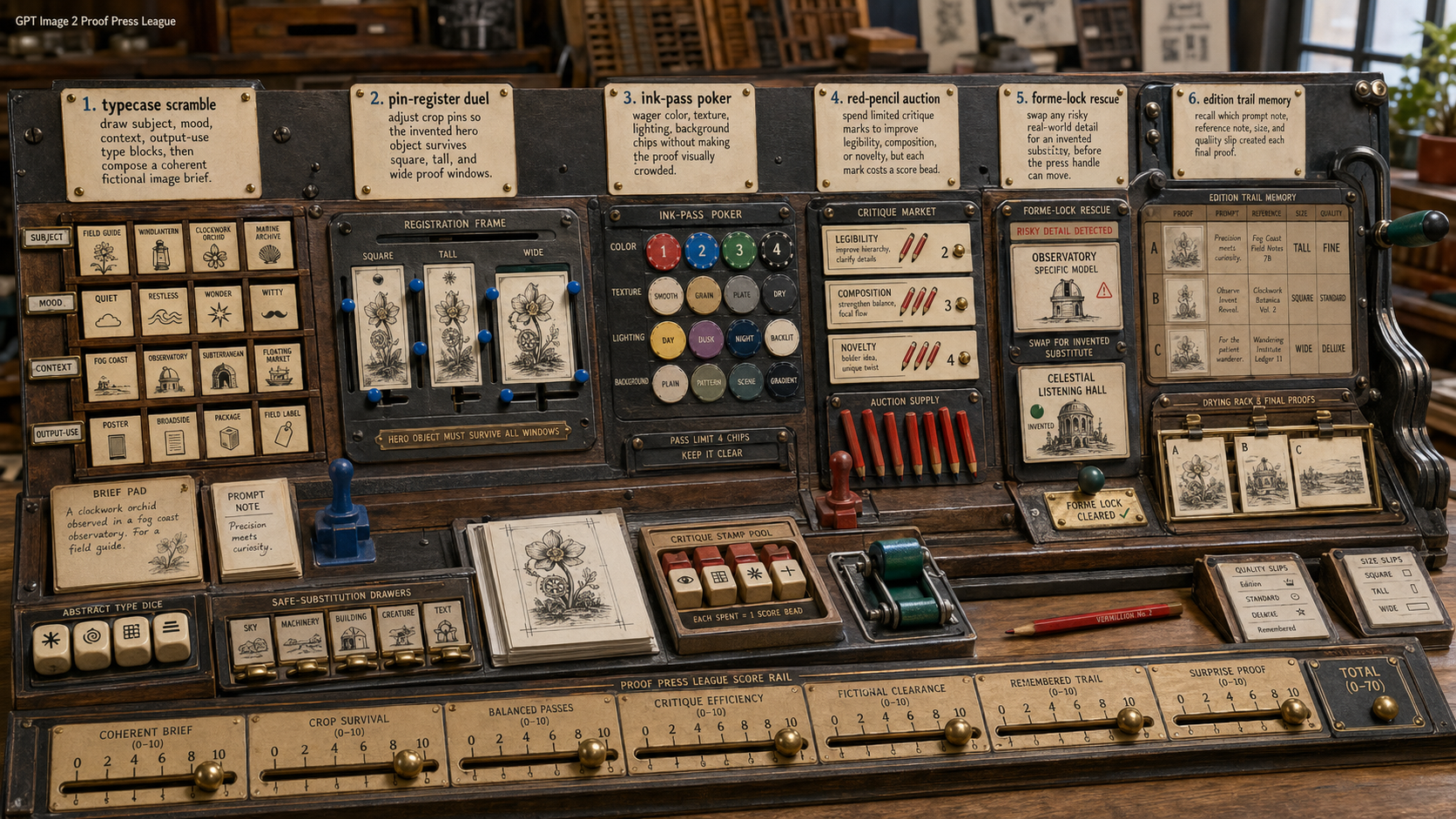
Create one original GPT Image 2 derived-play concept image as a 16:9 landscape scene. Title inside the image, small and legible:...
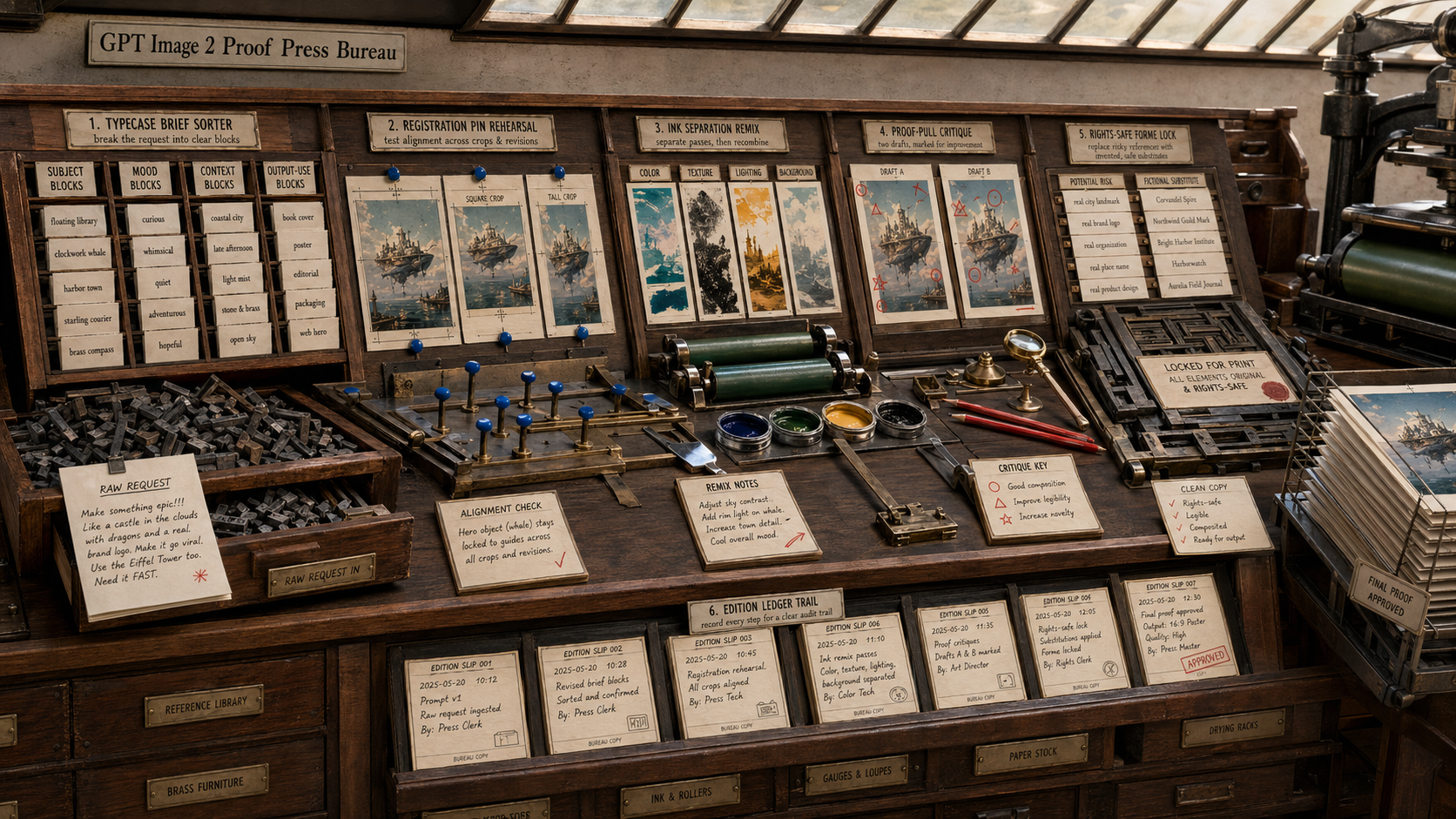
Create one original GPT Image 2 use-case concept image as a 16:9 landscape scene. Title inside the image, small and legible: "GPT...
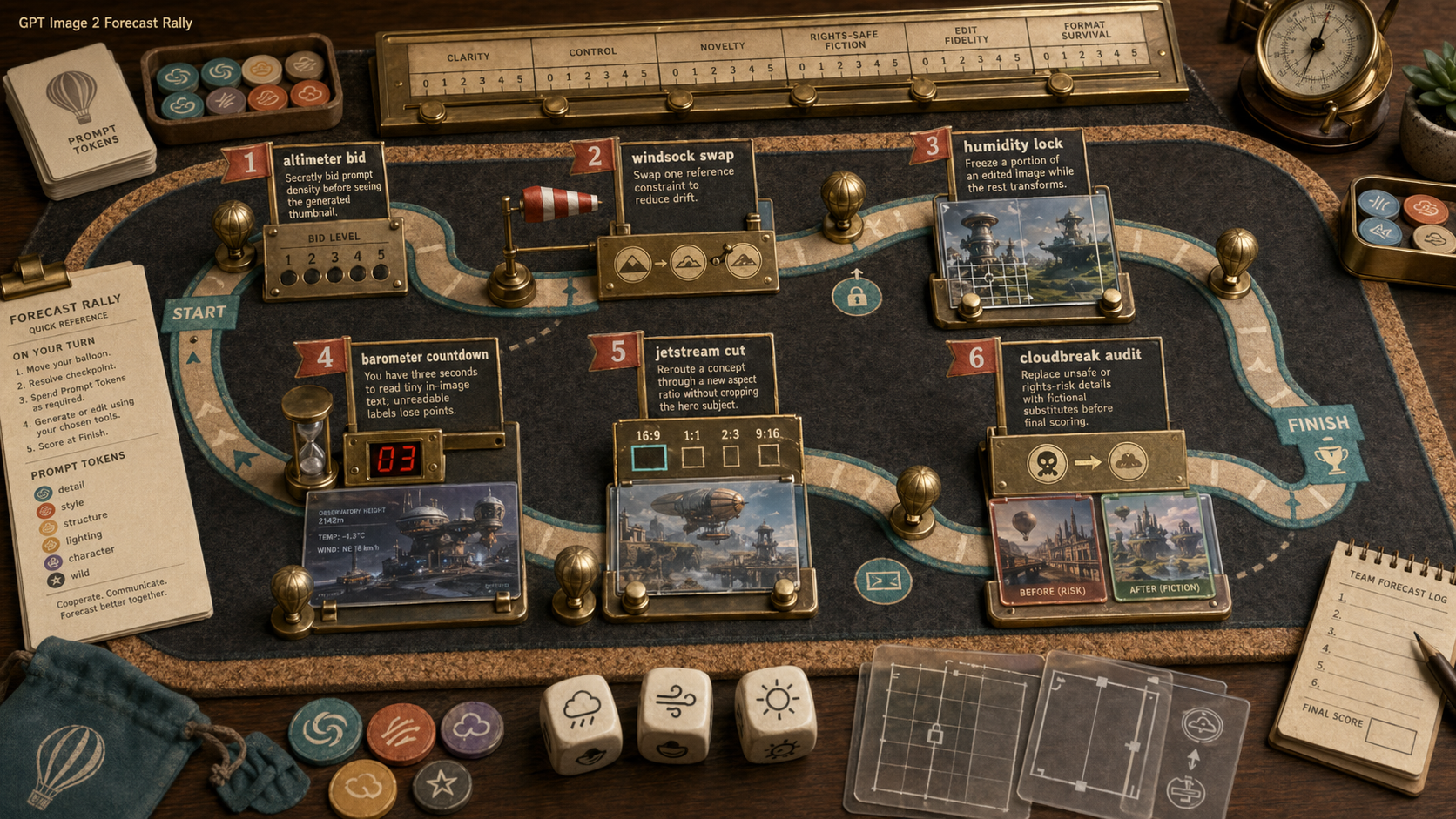
Create one original GPT Image 2 derived-play concept image as a 16:9 landscape scene. Title inside the image, small and legible:...