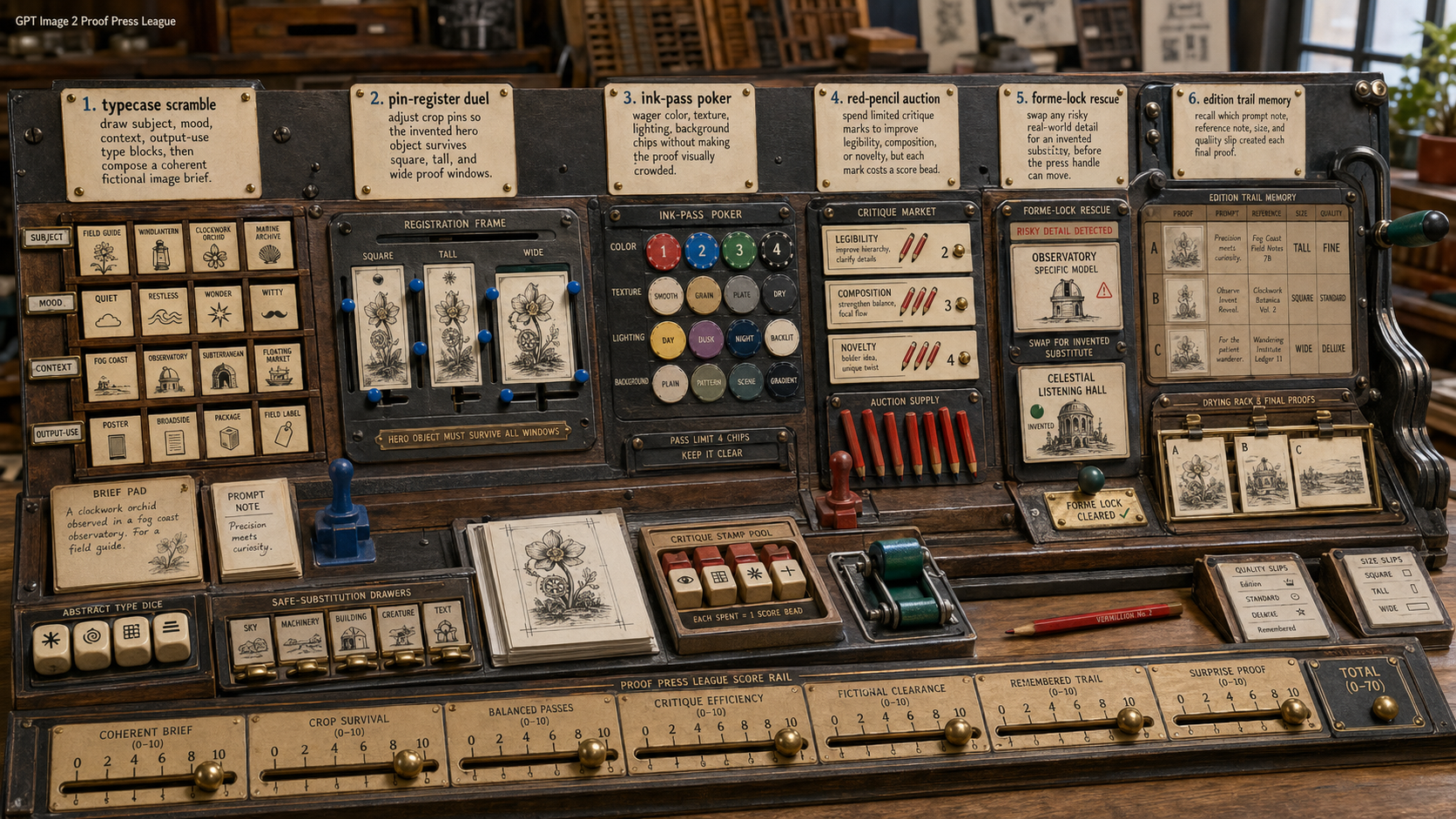
Create one original GPT Image 2 derived-play concept image as a 16:9 landscape scene.

Title inside the image, small and legible: "GPT Image 2 Proof Press League".

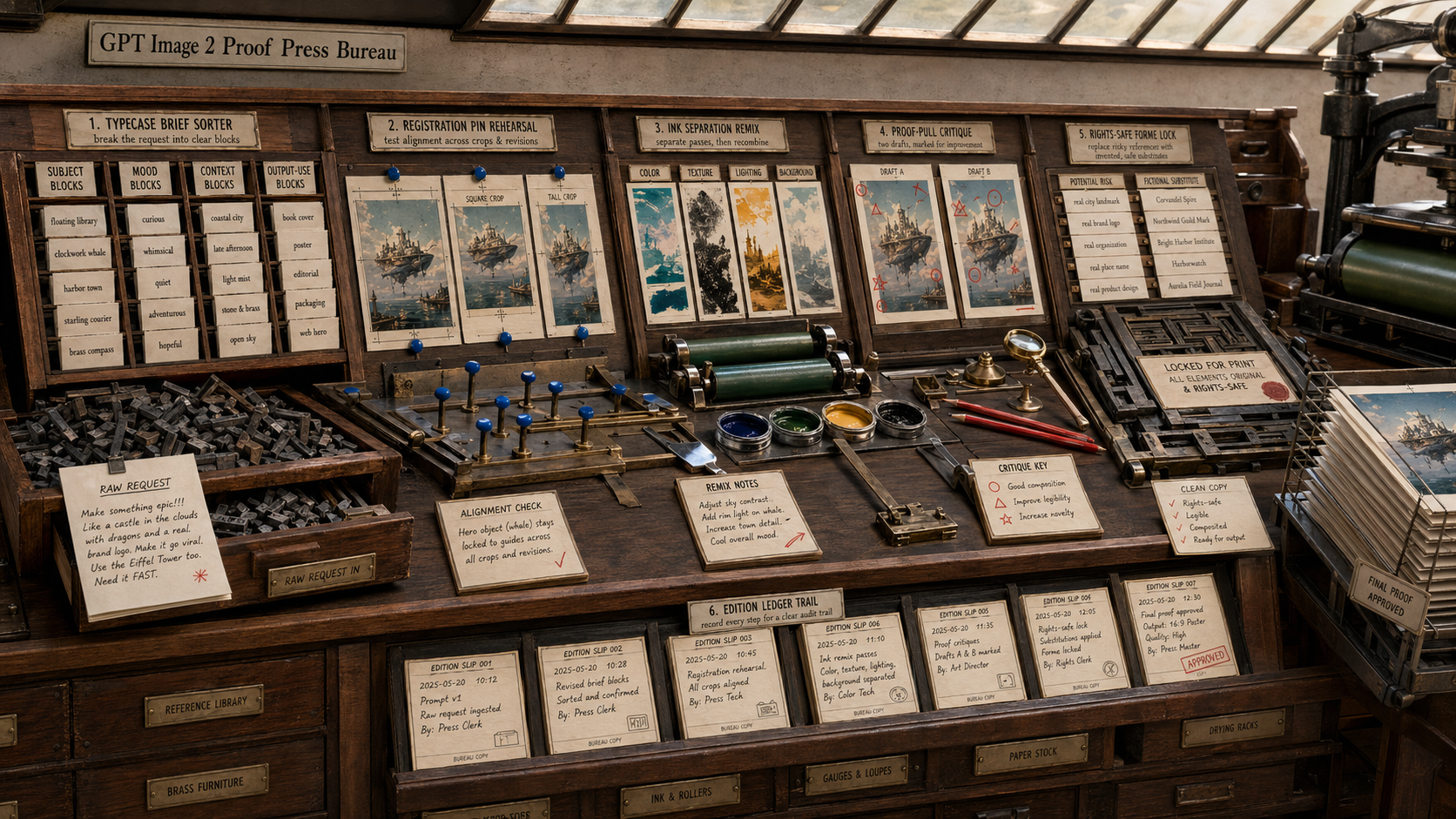
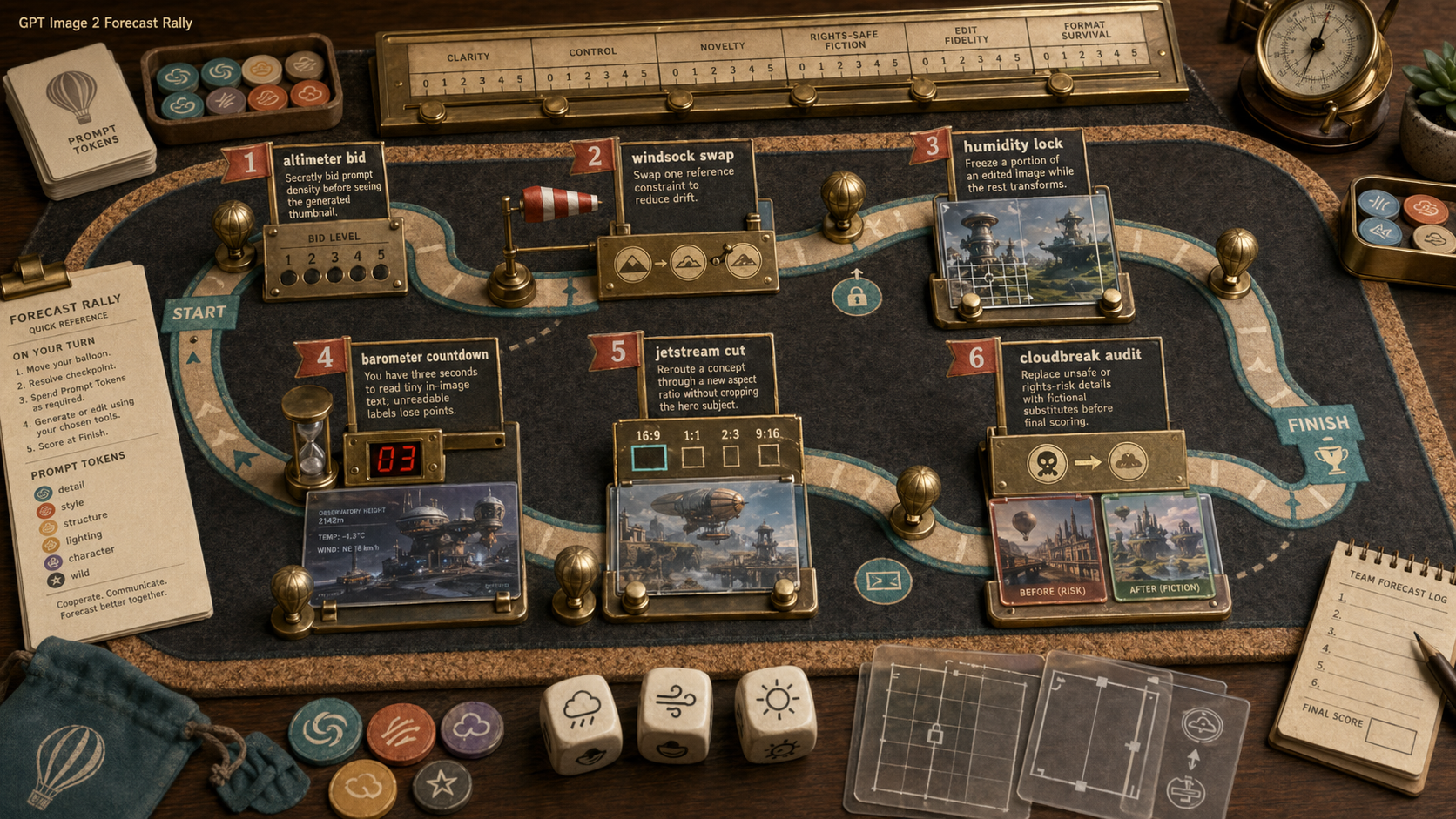
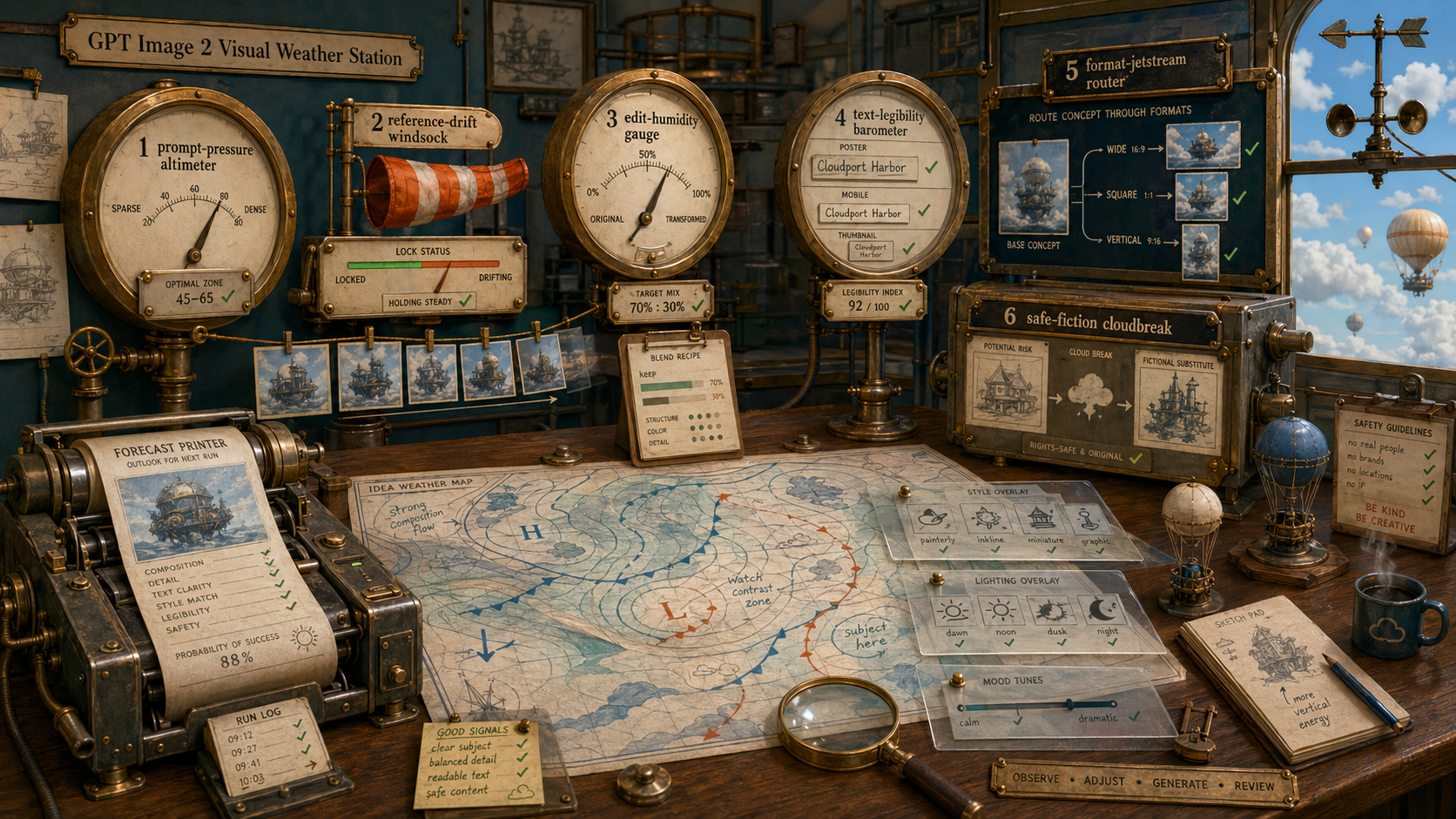
Core format: a playable letterpress workshop game derived from the Proof Press Bureau idea. Show one continuous mechanical tabletop press game with movable type tokens, registration-pin levers, ink cups, proof sheets, critique stamps, safe-substitution trays, edition ledgers, roller tracks, and a final drying-rack score rail. It must be one integrated playable printshop artifact, not a contact sheet, not a 2x3 grid, not separate cards, not a circular rules machine, not pinball, not a film stage, not a greenhouse, not a weather station, not a loom, not a laundromat, not an airport terminal, not a tabletop route map, not a transparent-background demo.

Six original play mechanics shown as labels on levers, trays, tokens, and score slips:
1. "typecase scramble" players draw subject, mood, context, and output-use type blocks, then compose a coherent fictional image brief.
2. "pin-register duel" players adjust crop pins so the invented hero object survives square, tall, and wide proof windows.
3. "ink-pass poker" players wager color, texture, lighting, and background chips without making the proof visually crowded.
4. "red-pencil auction" players spend limited critique marks to improve legibility, composition, or novelty, but each mark costs a score bead.
5. "forme-lock rescue" players swap any risky real-world detail for an invented substitute before the press handle can move.
6. "edition trail memory" players must recall which prompt note, reference note, size, and quality slip created each final proof.

Scoring rail: coherent brief, crop survival, balanced passes, critique efficiency, fictional clearance, remembered trail, surprise proof. Include abstract dice with type symbols, brass score beads, tiny fictional proof thumbnails, safe-substitution drawers, non-human pawn markers shaped like press tools, and concise readable labels.

Visual language: polished board-game product photography inside a warm letterpress studio; walnut trays, black iron press frame, ivory proof paper, cobalt pins, jade rollers, vermilion pencils, brass beads, graphite labels, soft skylight. All sample posters, products, places, organizations, marks, characters, and data are fictional.

Safety and originality constraints: no real brands, no trademarks, no celebrities, no public figures, no copyrighted characters, no living artist style imitation, no political persuasion, no elections, no party symbols, no harmful or illegal instructions, no sexual content, no nudity, no explicit content, no graphic violence, no gore, no blood, no weapons, no watermark.

Composition: low three-quarter view following the play path from typecase scramble at the left, through registration and ink-pass decisions, into critique and forme-lock rescue, ending at the edition trail memory rack on the right. The six mechanics should read as one continuous game with tactile controls and visible consequences.