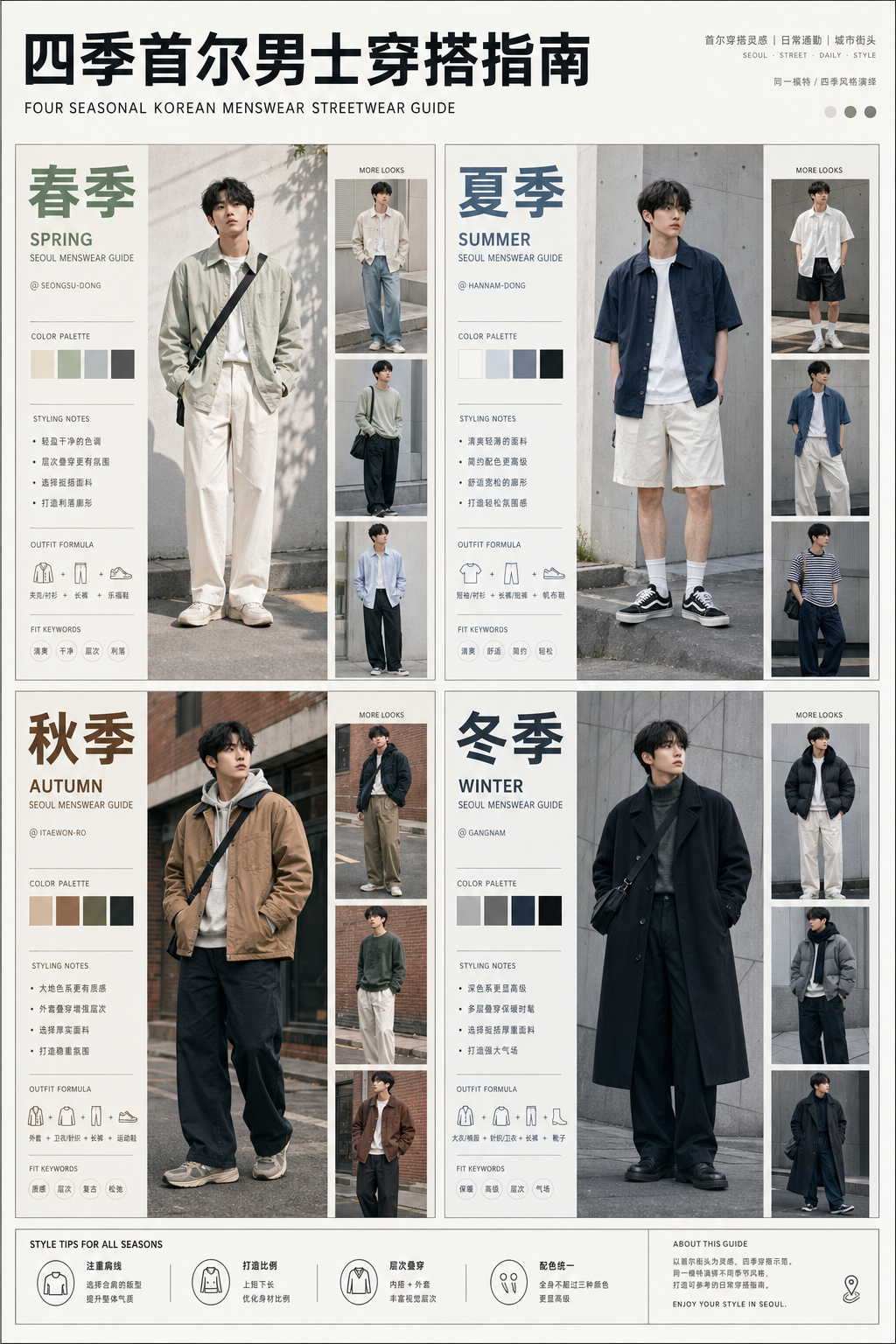
GPT Image 2 four-season Korean menswear guide
Create a high-completion editorial 2x2 series board for a fictional original male model: Four Seasonal Korean Menswear Streetwear...
把 GPT Image 2 的提示词歧义、约束混音、冲突熔断、系列一致性、迭代差异和小尺寸可读性,做成一面可操作的信号调试 patchbay。
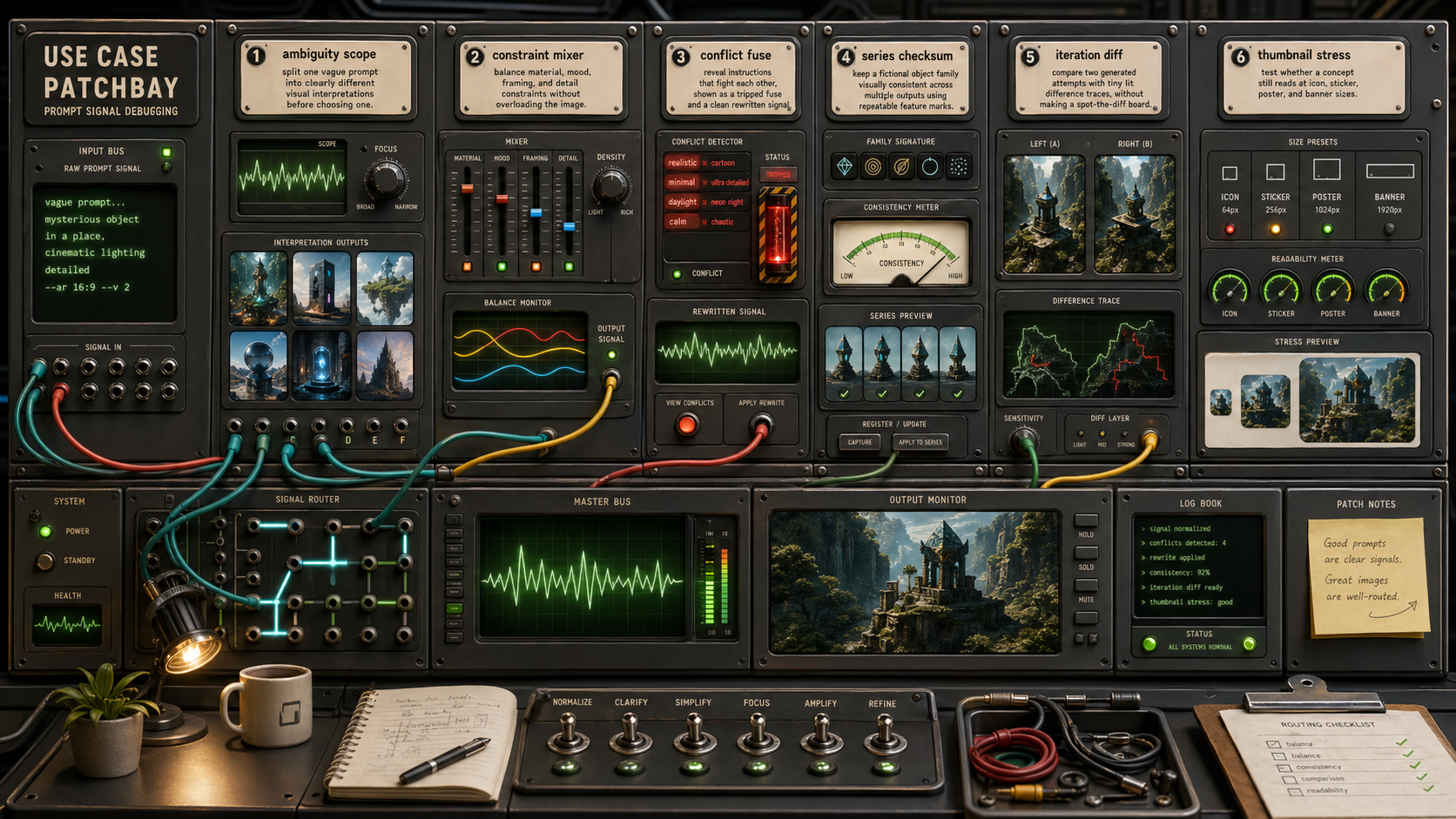
Use this as a reference for Ambiguity Scope, Conflict Fuse, Constraint Mixer, Iteration Diff workflows, prompt structure, visual constraints, and output review.
Create a wide 16:9 original GPT Image 2 use-case concept scene titled "Use Case Patchbay: Prompt Signal Debugging".

Purpose: visualize a fresh set of GPT Image 2 use cases as a modular signal-debugging studio for image prompts. This must be one continuous wall-sized patchbay and oscilloscope workstation, not a 2x3 board, not a card spread, not a craft loom, not a planetarium, not a projector, not a printshop, not a weather station, not a film stage, not a tabletop game.

Scene format: a fictional rights-safe image lab where abstract prompt fragments are treated like colored signals. Show a tall modular patch panel with braided cables, small oscilloscopes, meters, toggle switches, test thumbnails, warning lamps, and a clean workbench below. All brands, logos, people, organizations, and labels are fictional or absent.

Six use-case modules should be integrated into the single patchbay as distinct controls, each with a short readable fictional label:
1. "ambiguity scope" - split one vague prompt into clearly different visual interpretations before choosing one.
2. "constraint mixer" - balance material, mood, framing, and detail constraints without overloading the image.
3. "conflict fuse" - reveal prompt instructions that fight each other, shown as a safe tripped fuse and a clean rewritten signal.
4. "series checksum" - keep a fictional object family visually consistent across multiple outputs using repeatable feature marks.
5. "iteration diff" - compare two generated attempts with tiny lit difference traces, without making a spot-the-diff board.
6. "thumbnail stress" - test whether a concept still reads at icon, sticker, poster, and banner sizes.

Visual language: polished product-design 3D illustration with editorial clarity; graphite panels, off-white labels, colored cables in teal, red, yellow, and green; glowing waveform lines, crisp tiny thumbnails, tactile knobs and switches; high detail but organized.

Composition: dramatic diagonal perspective along the patchbay wall, with modules connected by visible cable routes and small output screens. The image should feel like a working instrument for debugging prompts, not a poster of examples.

Safety and originality constraints: original concept only; no external prompt or image source; all entities, marks, characters, places, labels, and institutions must be fictional or rights-safe; avoid disallowed sensitive, unsafe, adult, graphic, real-world identity, brand-restricted, character-restricted, living-artist-style, and watermark material.

Do not include: underwater sonar, bathymetry, portholes, reference locks, mask rings, crop windows, compression tests, 2x3 research board, tabletop card spread, greenhouse, loom, weather room, letterpress, planetarium, lantern slide stack, film set, airport terminal, laundromat, pinball table, or star map.
Create a high-completion editorial 2x2 series board for a fictional original male model: Four Seasonal Korean Menswear Streetwear...
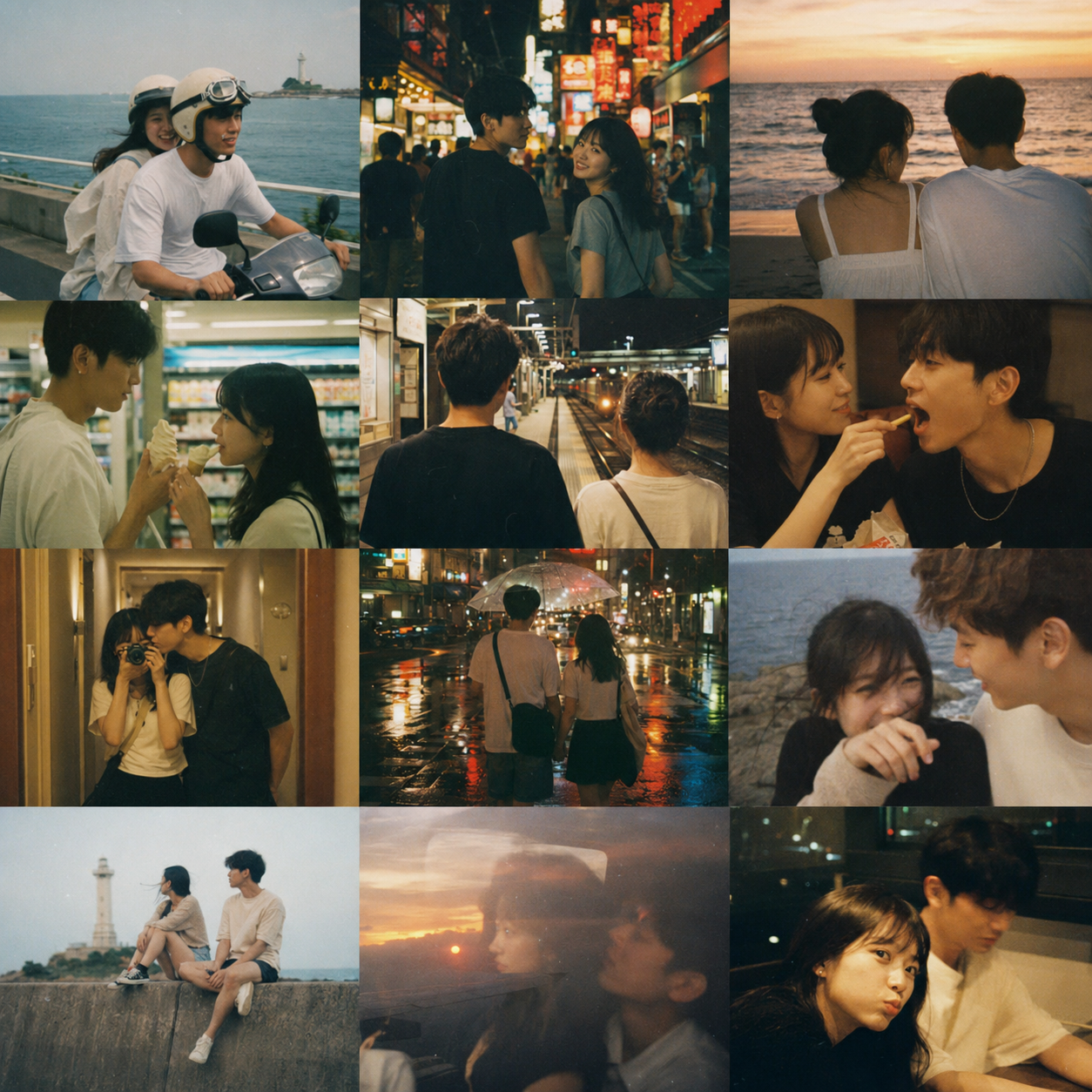
A collage of 12 photos capturing a young Japanese couple traveling together with an emotional and nostalgic tone. The images feel...
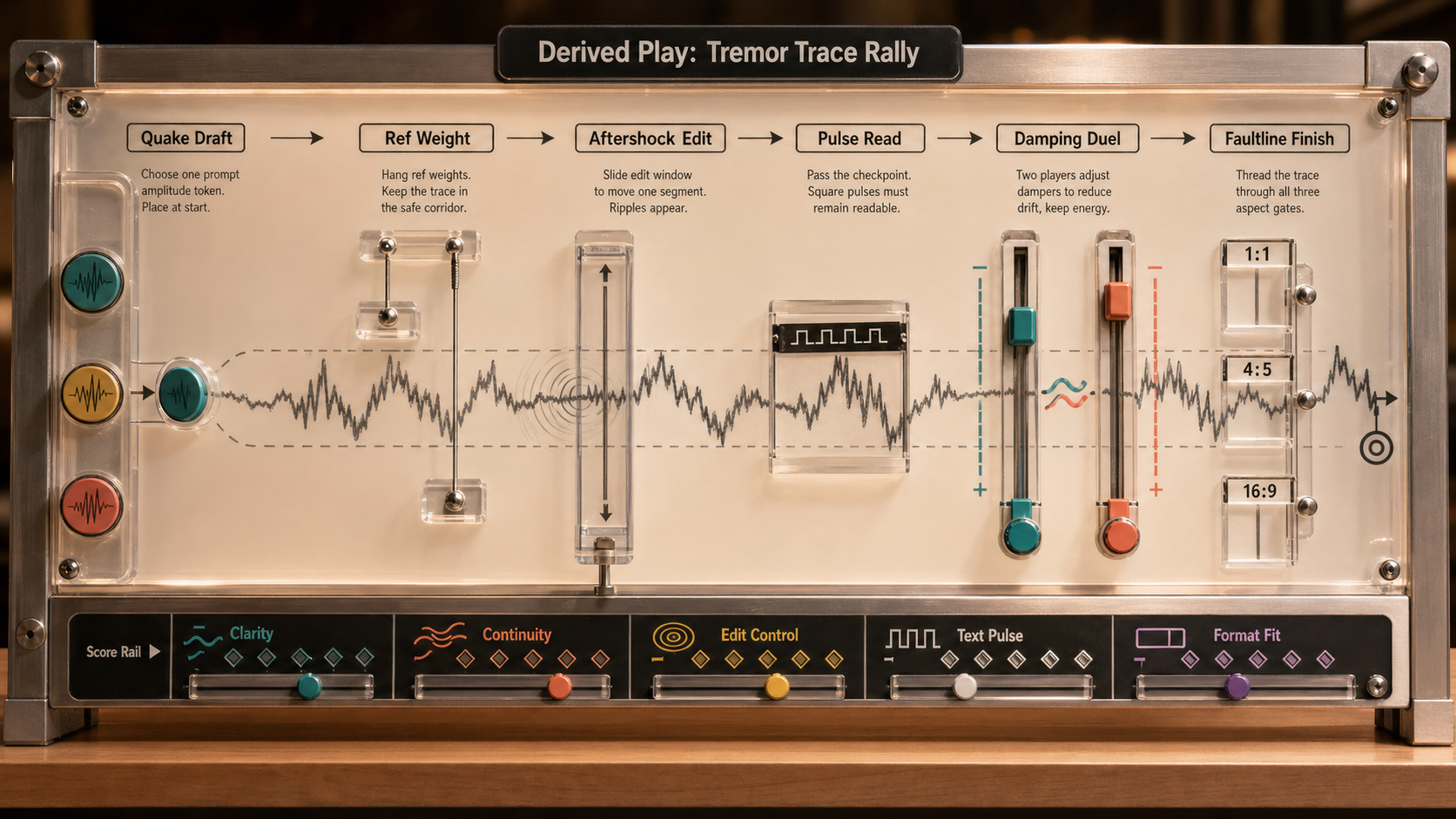
Create a second polished gallery image that derives a playable original mechanic from the previous seismograph-paper use case. Ti...
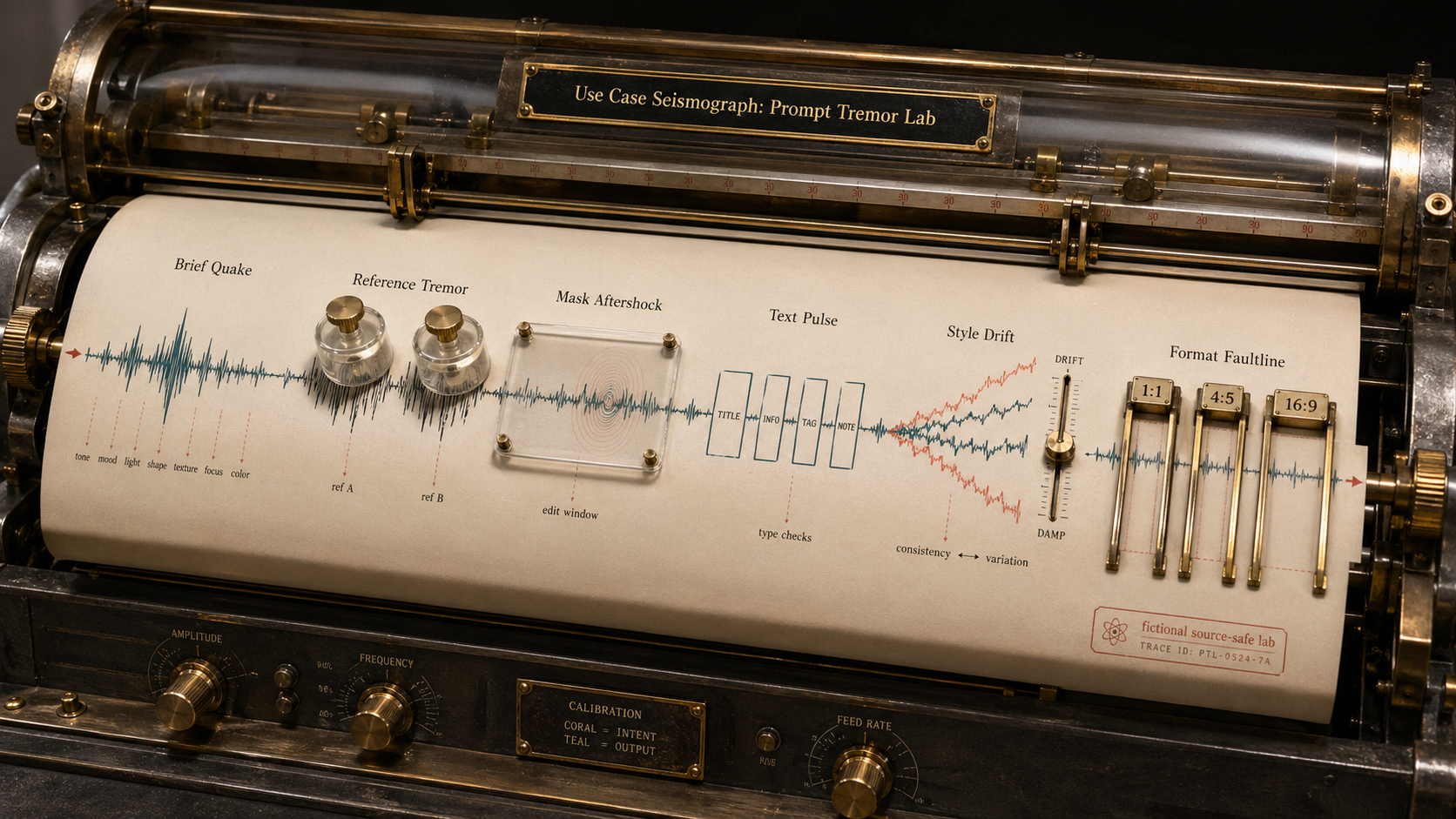
Create a single polished gallery image for an original GPT Image 2 use-case concept. Title text visible, small and legible: "Use...
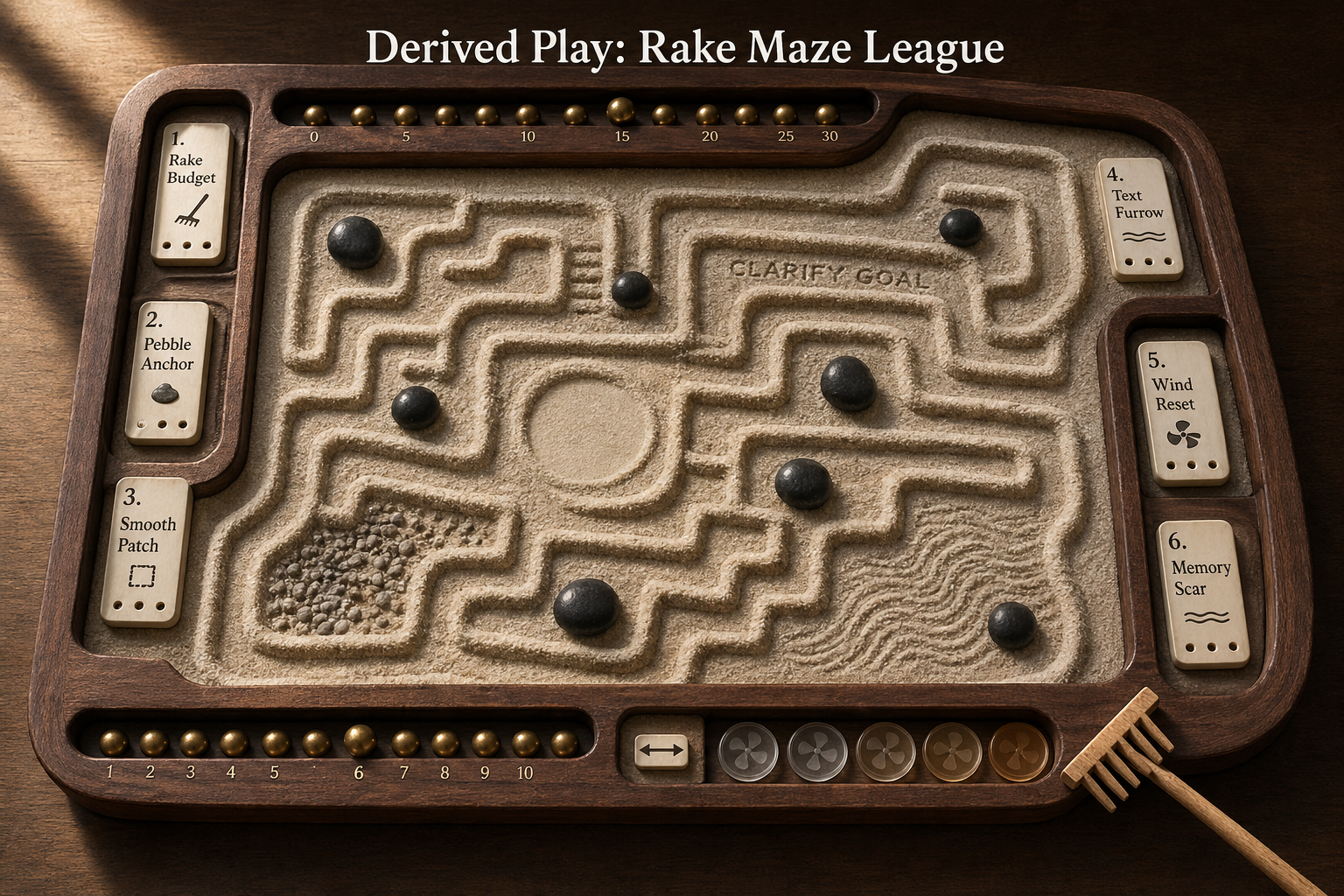
Create a second polished gallery image that derives a playable original mechanic from the previous sand-tray use case. Title text...
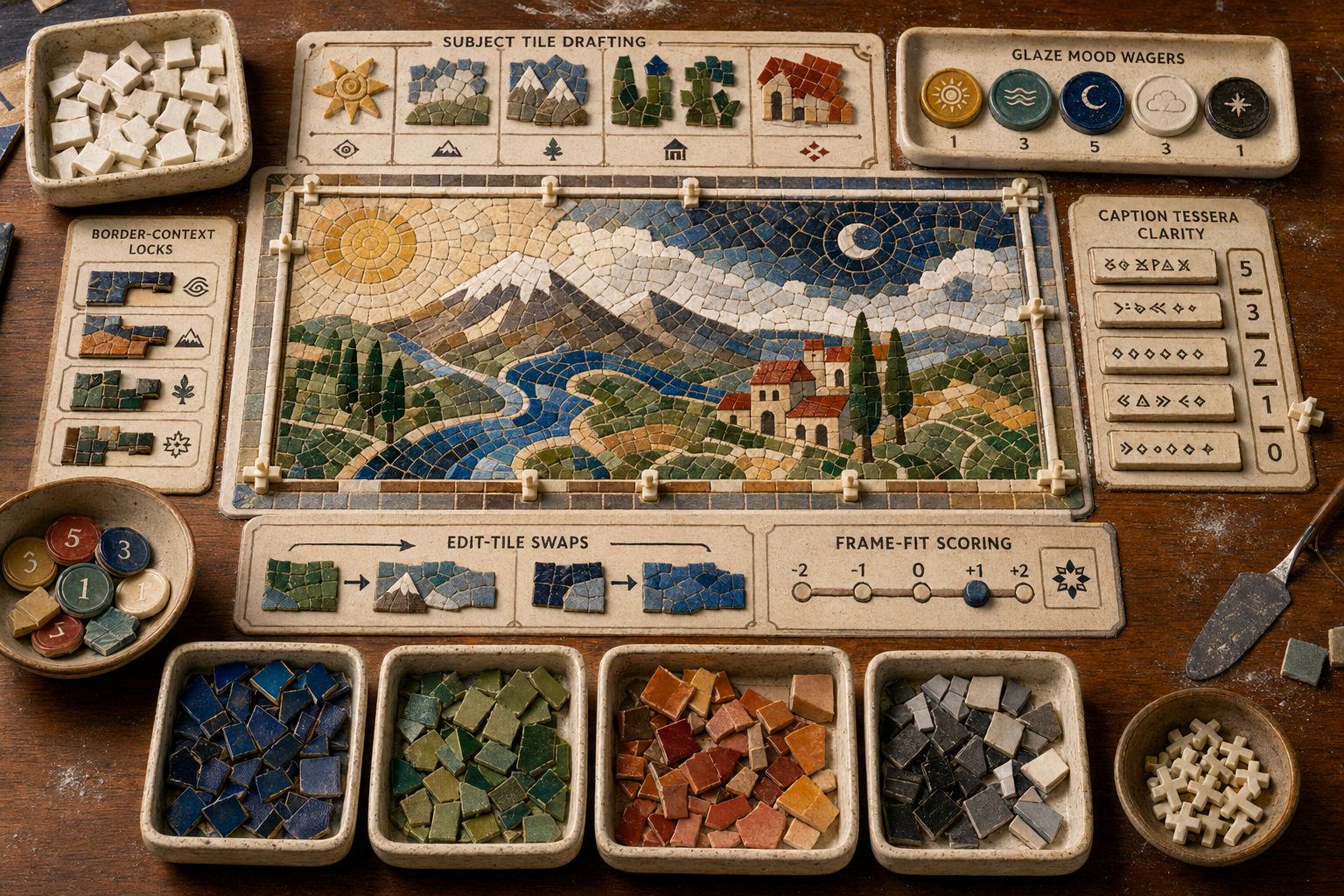
Draw one high-resolution panoramic image: a hands-on mosaic strategy game derived from GPT Image 2 prompting. A tabletop has one...