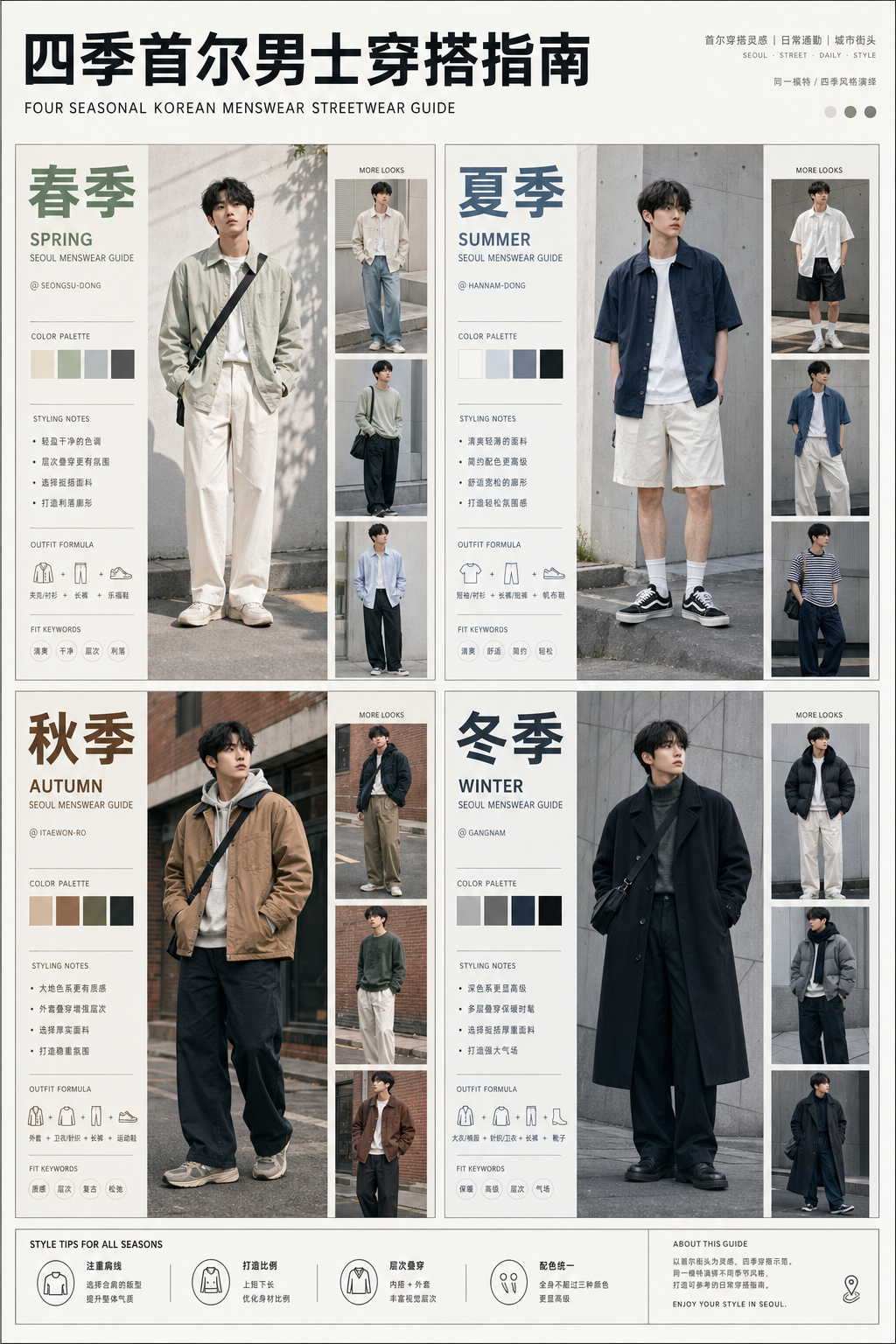
GPT Image 2 four-season Korean menswear guide
Create a high-completion editorial 2x2 series board for a fictional original male model: Four Seasonal Korean Menswear Streetwear...
把提示词调试派生成一台竖直磁吸线缆挑战柜:玩家通过线缆路由、过载熔断、checksum 徽章、diff 轨迹和缩略图闸门来测试生成规则。
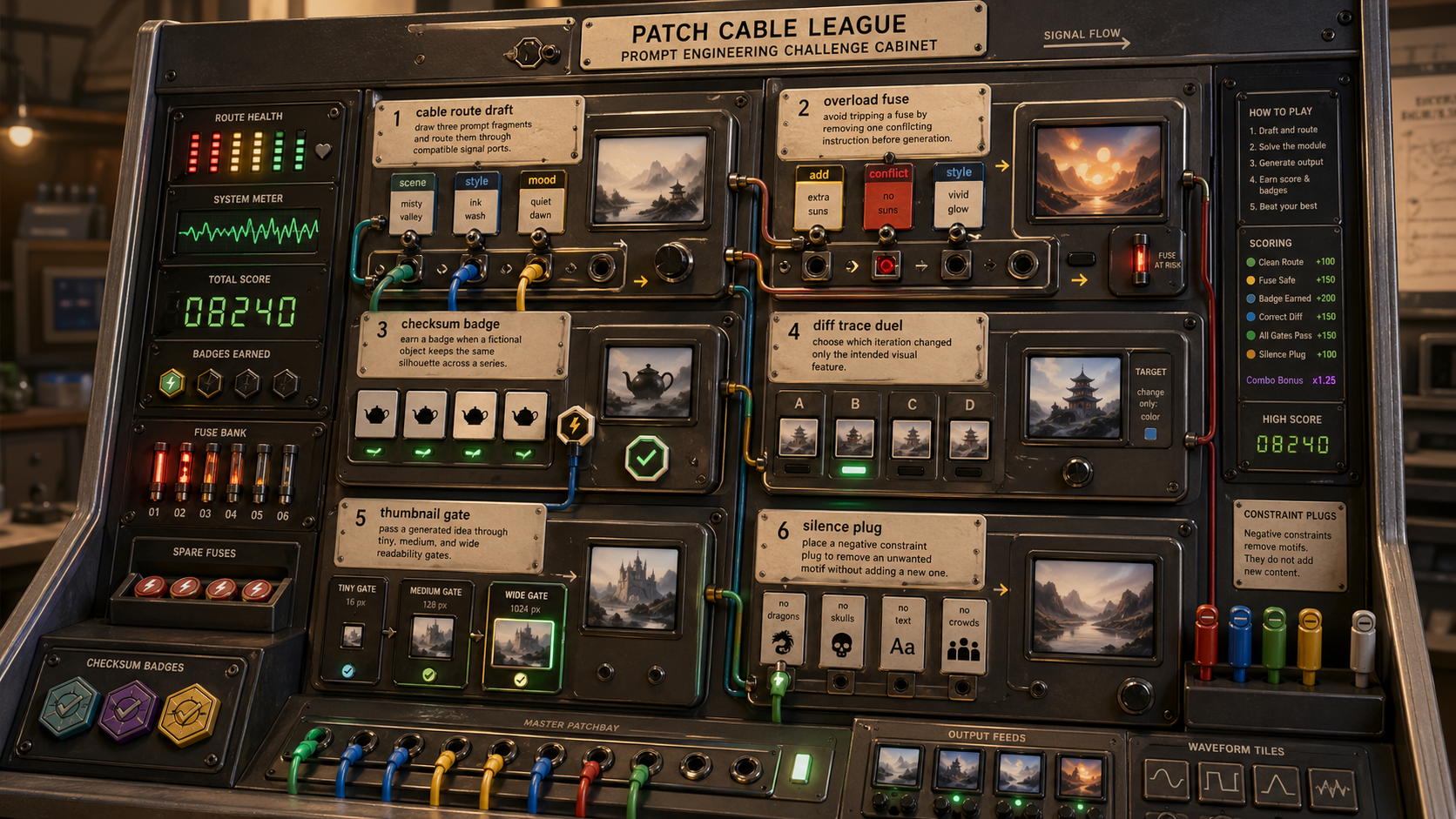
Use this as a reference for Cable Route Draft, Checksum Badge, Diff Trace Duel, Overload Fuse workflows, prompt structure, visual constraints, and output review.
Create a wide 16:9 original derived-play concept scene titled "Derived Play: Patch Cable League".

Purpose: derive a playable prompt-engineering game from the patchbay use-case idea, but make it a distinct physical play object: a vertical magnetic patch-cable challenge cabinet with route slots, score meters, fuse tokens, checksum badges, and tiny output screens. Do not make a 2x3 board, a card spread, a tabletop route map, a poster, a loom, a projector, a printshop, a weather station, a planetarium, a film stage, or a pinball table.

Scene format: a close diagonal view of a freestanding arcade-like modular signal cabinet in a fictional image lab. Players are absent. The cabinet has colored patch cords, removable constraint plugs, waveform tiles, small thumbnail screens, sliding gates, fuse indicators, and a scoring column. All brands, logos, people, organizations, and labels are fictional or absent.

Six derived play modes should be visible as mechanisms on the same cabinet, each with a short readable label:
1. "cable route draft" - draw three prompt fragments and route them through compatible signal ports.
2. "overload fuse" - avoid tripping a fuse by removing one conflicting instruction before generation.
3. "checksum badge" - earn a badge when a fictional object keeps the same silhouette across a series.
4. "diff trace duel" - choose which iteration changed only the intended visual feature.
5. "thumbnail gate" - pass a generated idea through tiny, medium, and wide readability gates.
6. "silence plug" - place a negative constraint plug to remove an unwanted motif without adding a new one.

Visual language: polished tactile prototype, half arcade cabinet and half engineering test rig; graphite metal, warm off-white labels, teal/red/yellow/green cords, glowing meters, crisp screens, small physical tokens; rich detail, organized hierarchy, playful but not cartoonish.

Composition: the full cabinet fills the frame from lower left to upper right; cable paths visibly connect the six mechanisms. The output should feel interactive and rule-based, with no hands, no humans, and no real-world brand marks.

Safety and originality constraints: original concept only; no external prompt or image source; all entities, marks, characters, places, labels, and institutions must be fictional or rights-safe; avoid disallowed sensitive, unsafe, adult, graphic, real-world identity, brand-restricted, character-restricted, living-artist-style, and watermark material.

Do not include: underwater sonar, bathymetry, portholes, reference locks, mask rings, crop windows, compression tests, 2x3 research board, tabletop card spread, greenhouse, loom, weather room, letterpress, planetarium, lantern slide stack, film set, airport terminal, laundromat, pinball table, or star map.
Create a high-completion editorial 2x2 series board for a fictional original male model: Four Seasonal Korean Menswear Streetwear...
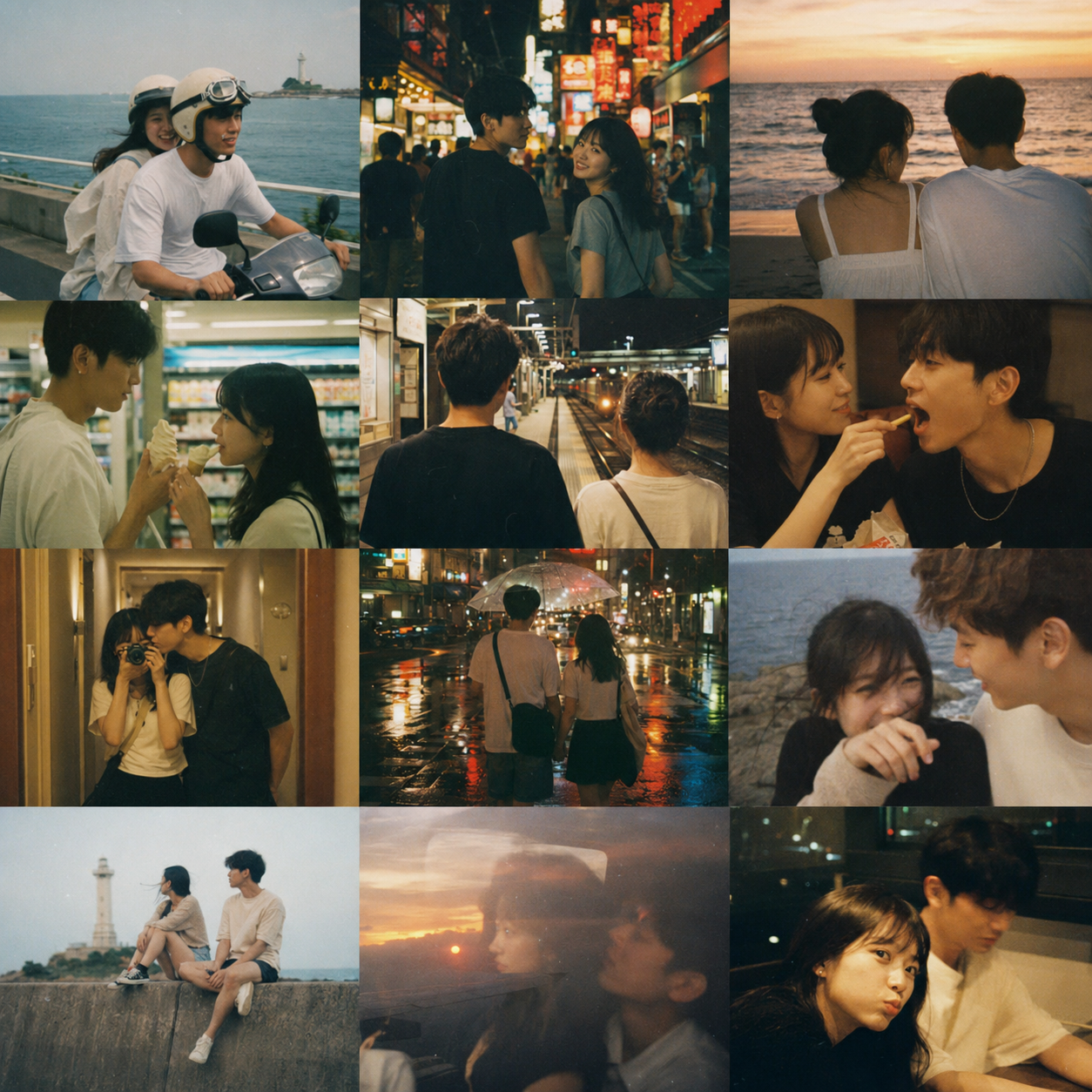
A collage of 12 photos capturing a young Japanese couple traveling together with an emotional and nostalgic tone. The images feel...
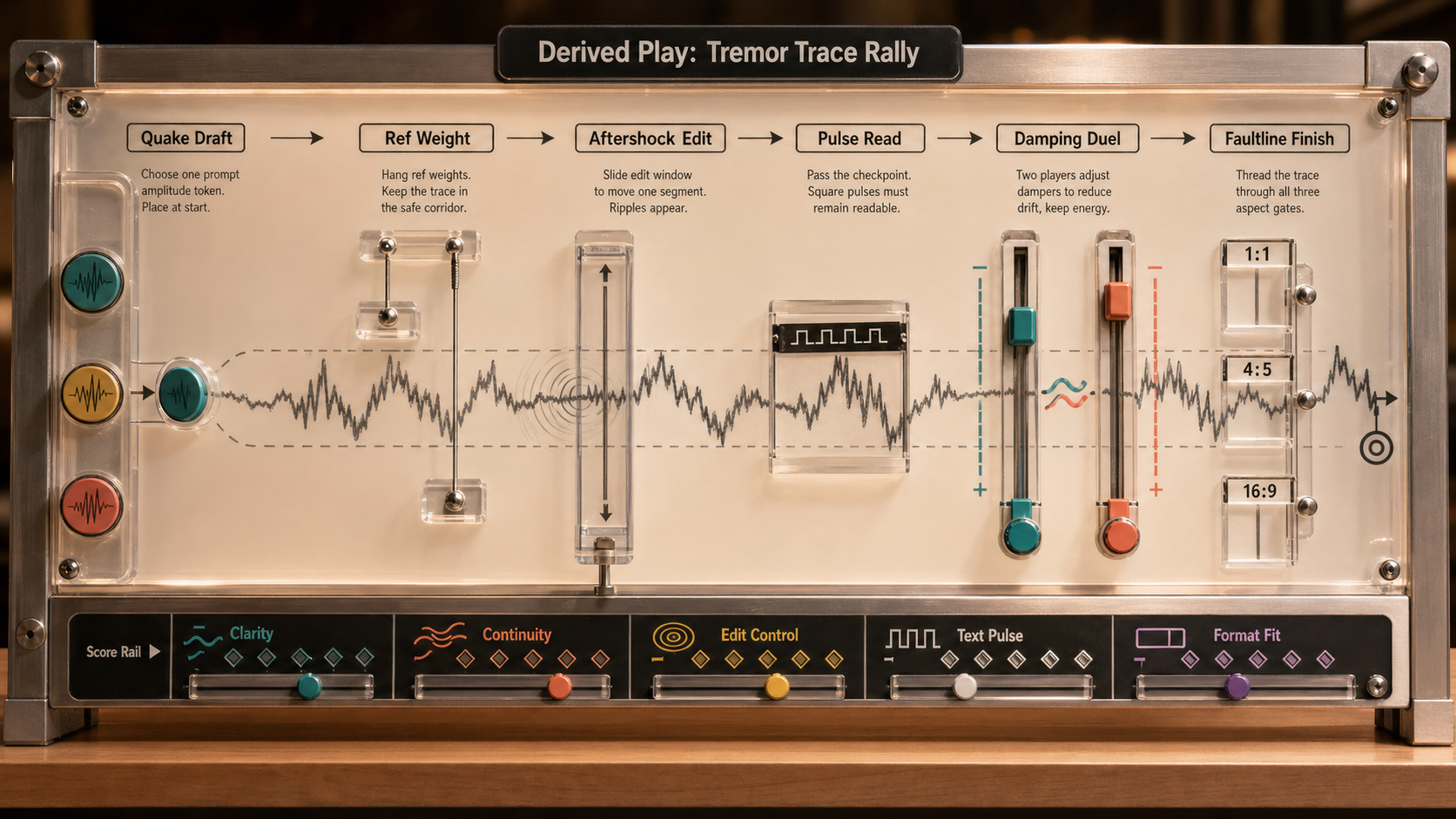
Create a second polished gallery image that derives a playable original mechanic from the previous seismograph-paper use case. Ti...
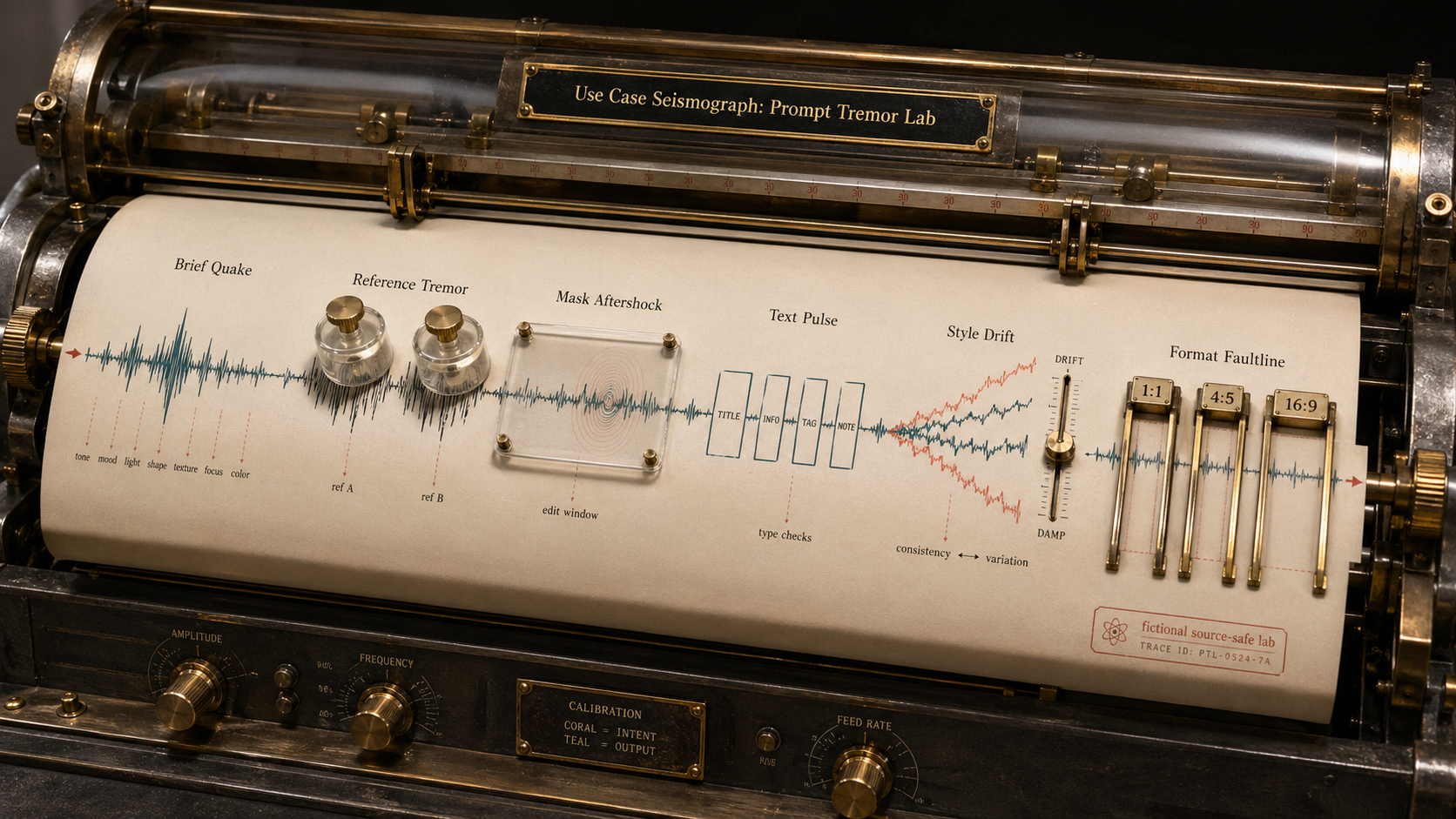
Create a single polished gallery image for an original GPT Image 2 use-case concept. Title text visible, small and legible: "Use...
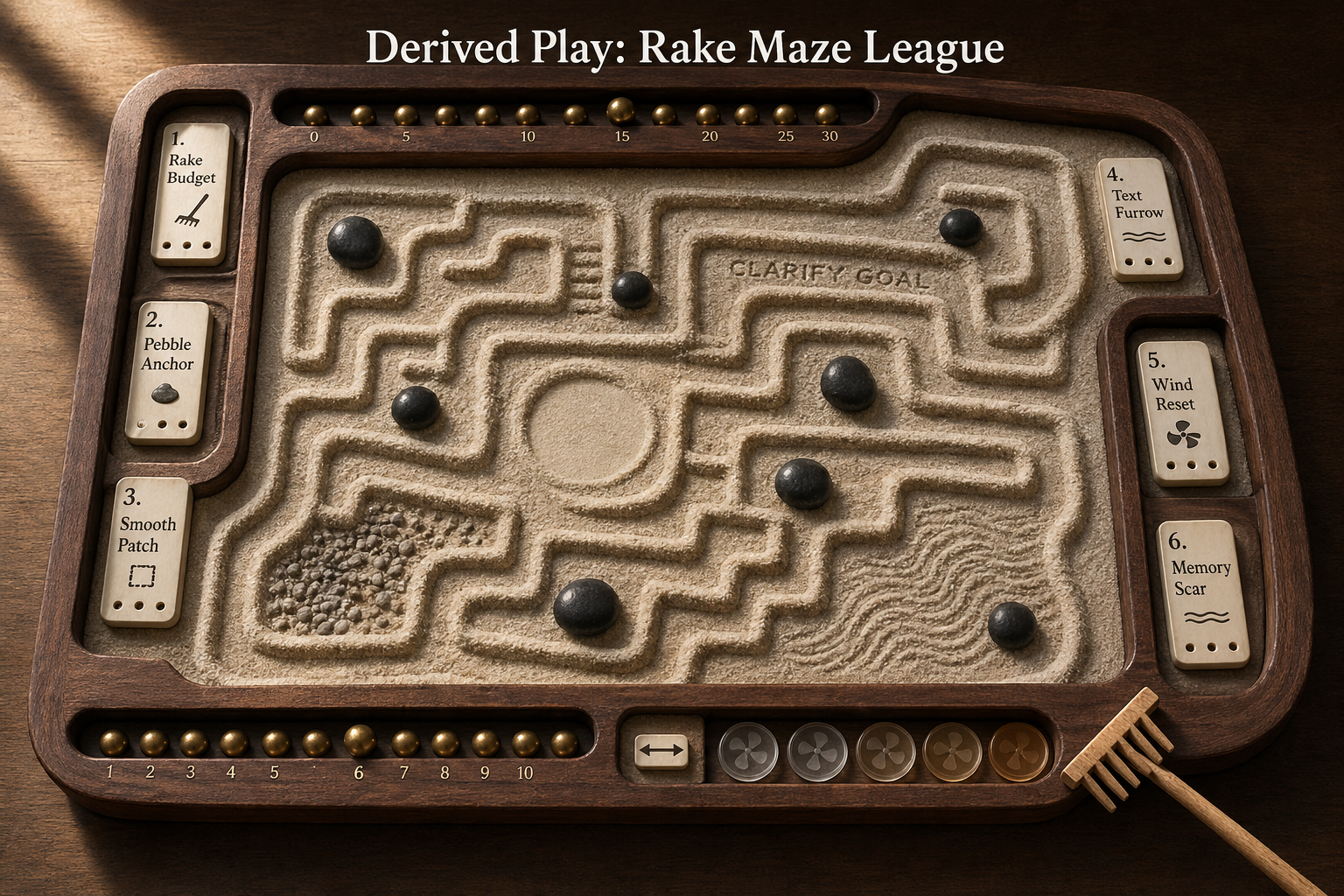
Create a second polished gallery image that derives a playable original mechanic from the previous sand-tray use case. Title text...
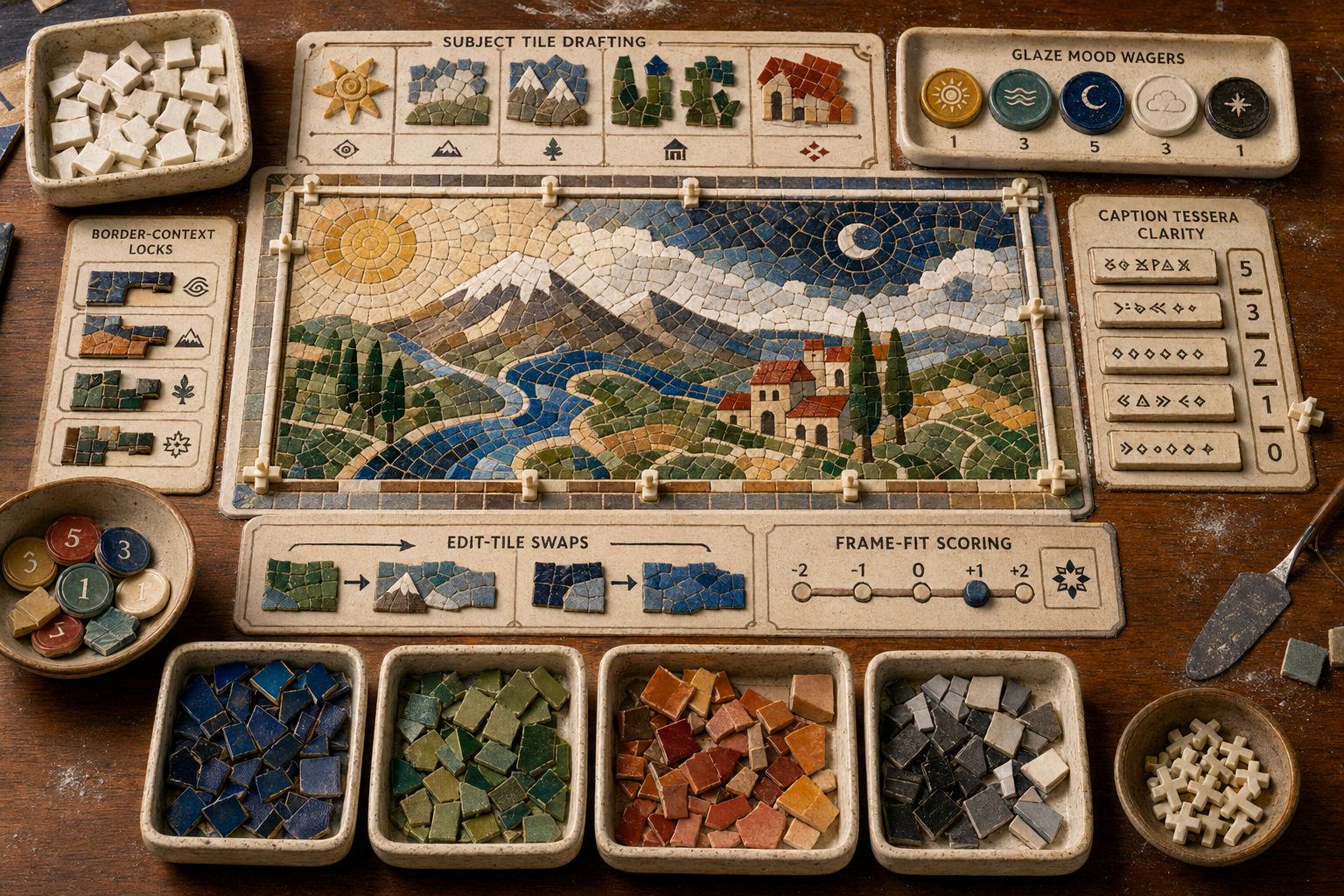
Draw one high-resolution panoramic image: a hands-on mosaic strategy game derived from GPT Image 2 prompting. A tabletop has one...