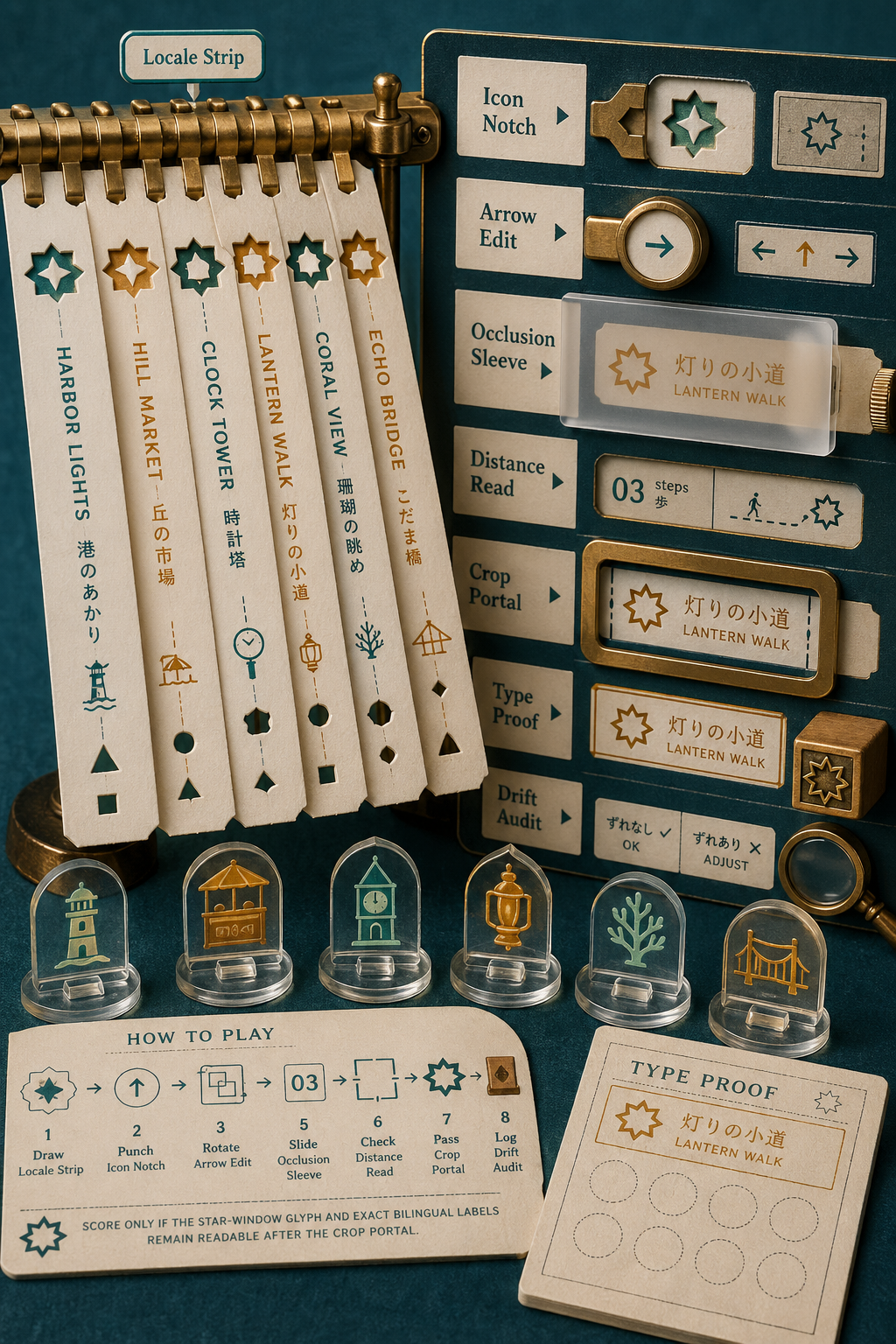
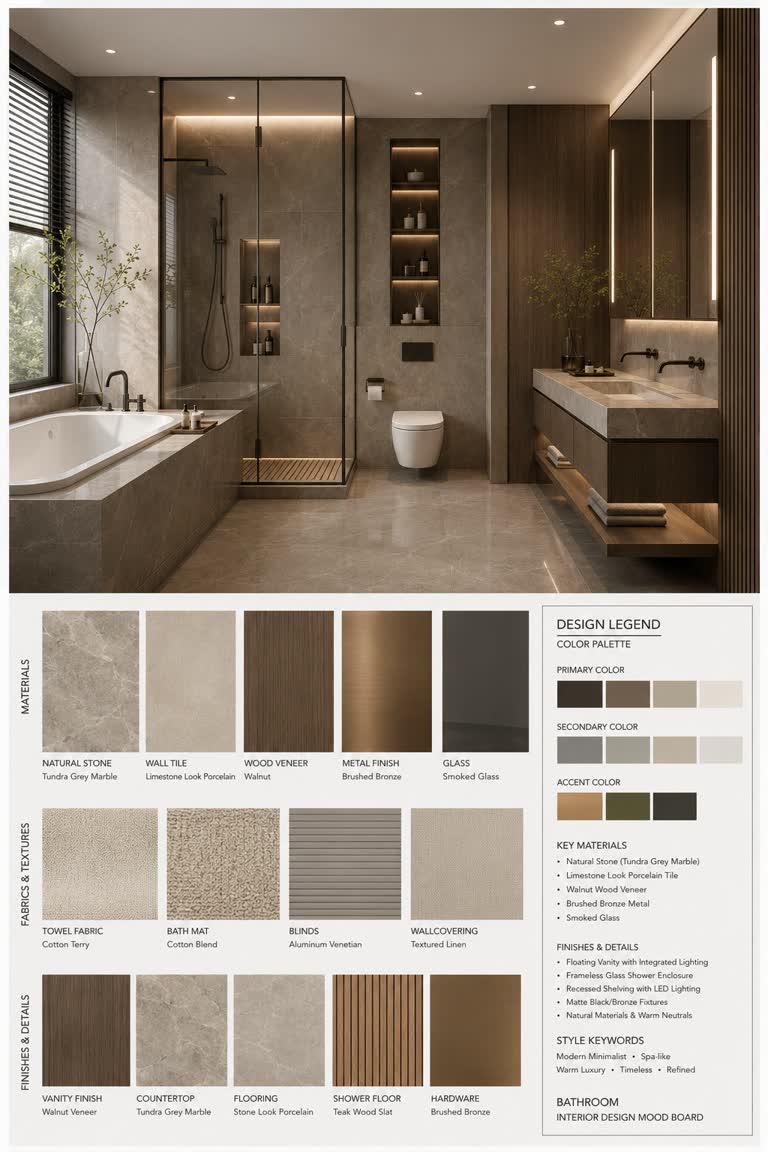
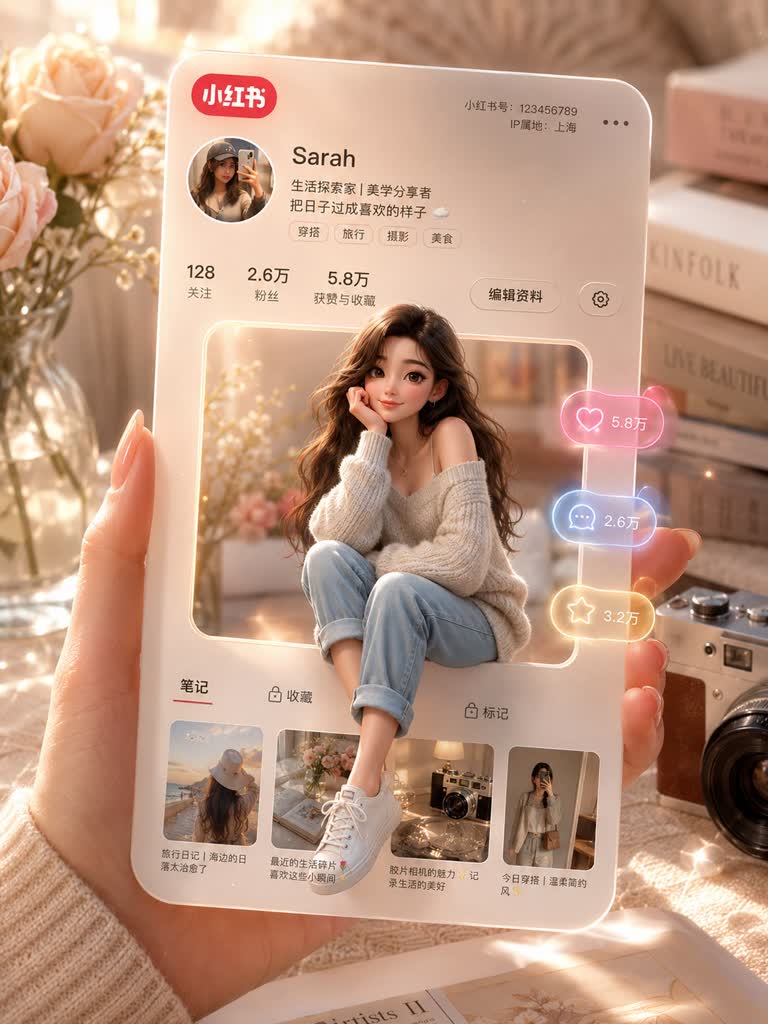
Create one polished public-gallery image titled "Derived Play: Glyph Ticket Hunt".

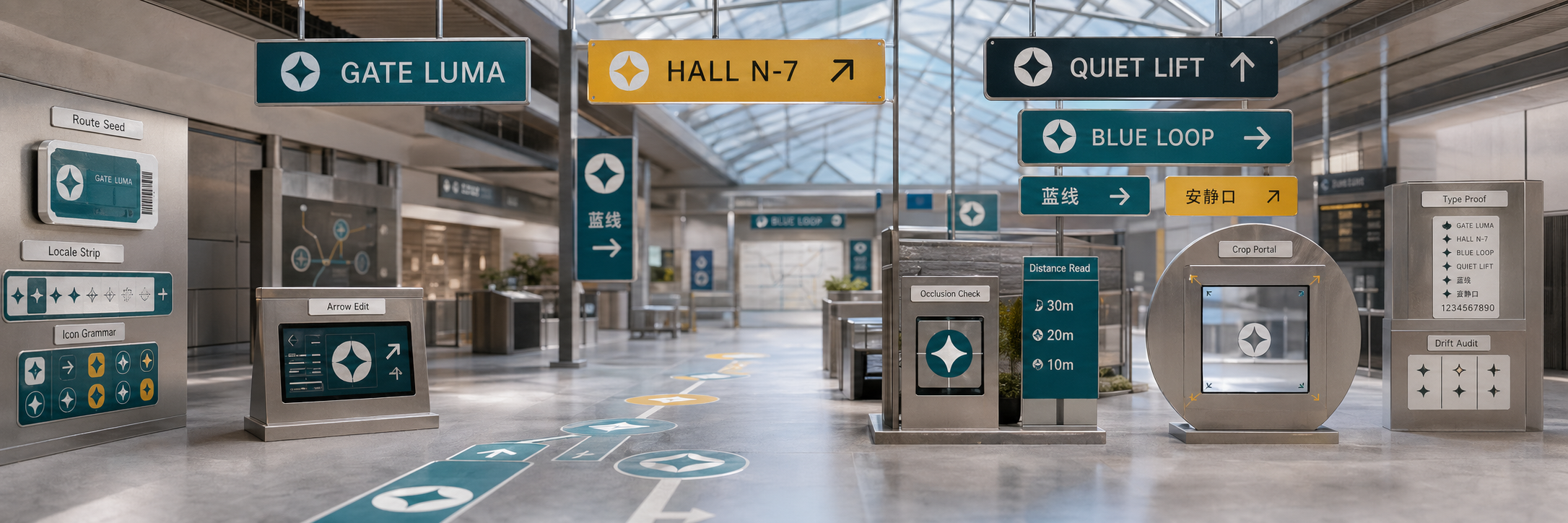
It is derived from Prompt Glyph Concourse but must become a different playable object: a handheld ticket-punch scavenger game, not the same concourse, not a grid, not a contact sheet, not a rectangular board, not cards-only, not a bakery deck, not a snowglobe rack, not a water basin, not a wardrobe carousel, not a fossil drawer, not a toy latch.

Output format: one vertical 2:3 macro product photograph of a fan of thick paper transit tickets clipped to a brass punch rail beside tiny acrylic station markers. No people, no hands, no logos, no real transit system, no real brands.

Play rules shown through objects: players draw one Locale Strip ticket, punch the matching Icon Grammar notch, rotate one Arrow Edit tab, slide an Occlusion Sleeve across part of the sign, inspect the Distance Read window, pass through one Crop Portal frame, then score a Type Proof stamp only if the same star-window glyph and exact bilingual labels remain readable.

Short visible labels: Locale Strip, Icon Notch, Arrow Edit, Occlusion Sleeve, Distance Read, Crop Portal, Type Proof, Drift Audit. Visual language: tactile premium tabletop prototype, matte paper tickets, brass rail, translucent sleeves, teal and saffron ink, crisp tiny text, invented star-window glyph repeated exactly, playful but sophisticated, fictional, original, unbranded, non-political, harmless, non-adult, non-graphic, rights-safe.
Source note: Original ticket-punch scavenger game derived locally from the Prompt Glyph Concourse concept. Official OpenAI documentation was used only for factual capability framing; no external prompt, image, artwork, visual style, brand, character, repository, source image, or case-study mechanic was reused.
GPT Image 2 Model
OpenAI
Confirmed high-quality generation/editing, flexible image sizes, and high-fidelity image input support; no prompt text, image, visual style, or case-study mechanism reused.
Accessed 2026-04-26 · OpenAI website terms; cited for factual capability context only
Open source link
Image generation - OpenAI API
OpenAI
Confirmed generation/edit endpoints and multi-turn image workflows; no prompt text, image, visual style, or case-study mechanism reused.
Accessed 2026-04-26 · OpenAI documentation terms; cited for factual capability context only
Open source link
Introducing our latest image generation model in the API
OpenAI
Confirmed broad practical use-case categories and text-rendering/instruction-following context; no prompt text, image, visual style, or case-study mechanism reused.
Accessed 2026-04-26 · OpenAI website terms; cited for factual capability context only
Open source link